Get Full Government Meeting Transcripts, Videos, & Alerts Forever!
Get email alerts on the Downtown Revitalization topic
No spam. Unsubscribe anytime.
Heritage Ohio outlines Main Street plan for Waverly, cites $2,500 grant and stakeholder process
Summary
Heritage Ohio staff told Waverly City residents that the village is an "aspiring" Main Street program, described a four-point downtown strategy and said the village received a competitive $2,500 state allocation matched by local funds; staff will meet the stakeholder group tomorrow and return with recommendations in about a month.
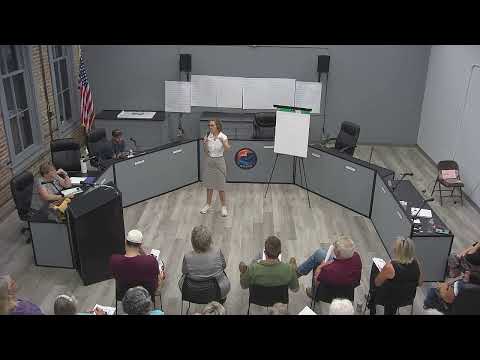
Heritage Ohio representatives presented a Main Street downtown revitalization program to Waverly City residents in an evening meeting, outlining a four-point strategy of economic vitality, design, promotion and organization and saying the village received a competitive $2,500 state allocation that the community matched.
Francis Joe Hamilton, director of revitalization for Heritage Ohio, told attendees the organization "saves the places that matter, build[s] community and live[s] better," and described how the statewide Main Street network supports small towns. Hamilton said Heritage Ohio provides an aspiring program with a one-year membership, staff visits, unlimited email and phone consultation and training opportunities.
"We start with your local assets and your people," Hamilton said, describing how the economic-vitality committee focuses on one-on-one work with business and building owners and on deliberate recruitment of complementary businesses. He also discussed design work—historic-preservation care, streetscape cleanliness and storytelling exercises such as short walking tours—and said the promotion committee emphasizes routine, repeatable events to create habits that bring people downtown.
Lona Swisher, assistant director of revitalization, led an audience exercise that asked residents to describe their "favorite place". Several residents said the downtown felt safe and welcoming and highlighted gardens, music venues and neighbors who sweep sidewalks as examples of local strengths. Swisher and Hamilton said those personal stories help frame priorities for small, implementation-focused projects.
Hamilton described stakeholder expectations Heritage Ohio sets for communities: the initial stakeholder group typically agrees to serve for one year, attend the majority of meetings, serve on at least one committee and contribute volunteer time (Hamilton cited a typical expectation of six to 10 volunteer hours per month). "We want to give you work plans so volunteers know what they are signing up for," he said.
On funding, Hamilton said Waverly received a competitive $2,500 grant through a state allocation; the community provided an additional $2,500 match to pay for a downtown assessment resource team visit. He said Heritage Ohio will meet the stakeholder group the following morning for a three-hour session and return in about a month with specific committee recommendations and practical work plans.
Participants listed a preliminary stakeholder roster that includes local school and chamber representatives, museum and library contacts, downtown business and building owners, a council member and mayoral office staff. Heritage Ohio staff said they will scan sign-in sheets and questionnaires to provide the stakeholder group with community input and will help shape the first work plans before the group begins recruiting additional volunteers.
The session closed with staff offering contact information for follow-up and reiterating that many initial projects require little or no funding but that a sustainable program typically mixes municipal support, fundraising and partnership contributions.
Heritage Ohio and local stakeholders are scheduled to continue the process with a stakeholder work session the next morning; staff said they will return in approximately one month with concrete recommendations and work plans.