Get Full Government Meeting Transcripts, Videos, & Alerts Forever!
Get email alerts on the Building Abatement topic
No spam. Unsubscribe anytime.
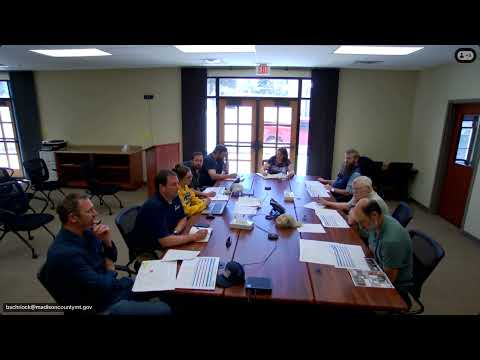
Madison County project team schedules Thursday walkthrough as contractors detail asbestos and lead abatement plan
Summary
County project staff and abatement contractors agreed on a phased approach to remove asbestos and address lead paint in the courthouse renovation, confirmed permitting and third-party air-clearance testing needs, and scheduled a coordinated site walkthrough for Thursday at 9 a.m.
Madison County project staff and contractors reviewed abatement strategy for the county courthouse and scheduled a coordinated site walkthrough for Thursday at 9 a.m. The contractors advised the team that the work will be done in phases, with the building addition removed first to allow excavation and then a top-down abatement of the existing courthouse.
The meeting focused on distinguishing asbestos and lead work, clarifying permits and notifications, and reducing remobilizations. RC, the abatement contractor, told the group that ‘‘there are no routine state inspections; they just show up randomly,’’ and said the project will require independent third-party final air-clearance testing. Northern Industrial Hygiene was identified in the meeting as a likely third-party testing provider; meeting participants agreed that the air-clearance testing will need to be contracted separately from the abatement bid documents because the third party must be independent of the abatement contractor.
Why it matters: the courthouse work involves hazardous materials and public funds, so the county must meet regulatory notification requirements, confirm independent testing, and coordinate trades to avoid repeated containment setups that would add cost and delay.
Contractors described how asbestos and lead risks will determine work methods. They said materials testing in several vault rooms returned less-than-1% levels for a floor leveler under vinyl sheet flooring, a finding that does not automatically trigger EPA removal thresholds but does affect how crews must work under OSHA guidance when materials are disturbed. The team also discussed materials and repair strategies for window sashes, trim and historic woodwork; Pat, the project architect, said most windows appear in ‘‘generally good shape’’ after a prior restoration and may need only limited sanding or consolidation in place rather than full off-site stripping.
Permits and notifications: the team confirmed they will submit the required 10-day demolition notice before demolition work begins and that village/city permit copies are on file; participants said the state building-permit review had minor comments and was expected to clear in the coming week. Contractors noted that because some testing items are not in the current bid scope, the county will execute a separate agreement or change order to secure independent air-clearance testing and any additional sampling.
Phasing and logistics: the contractor recommended minimizing mobilizations by combining asbestos and lead work when possible (for example, performing lead paint scraping or removal while containment is already in place for asbestos). The agreed phasing is to remove the addition first, then proceed top-down through the original courthouse. The team emphasized close coordination on shop drawings so MEP penetrations and anchors are identified in advance and fewer return visits are required.
Scope uncertainties and sampling protocol: participants flagged areas where MEP penetrations, adhesive-backed materials behind drywall (identified as ACM adhesive in the plans) and certain floor levelers could introduce additional abatement scope once walls or floors are opened. The contractors said they will rely on targeted sampling and lab turnaround (typically a few days for standard tests) and will route questionable samples through RC for lab submission. The group agreed to establish a testing protocol so that unexpected positive samples found during demolition can be sent promptly to the lab and priced or addressed via supplemental agreement if required.
Walkthrough and next steps: the team set a Thursday 9:00 a.m. on-site walkthrough to mark penetrations, review windows and align scope. RC noted travel time and asked for a morning start; organizers said they will bring lead reports and drawings to the walkthrough. Participants also asked that Northern Industrial (or the selected independent lab) be confirmed and that a copy of key plans be circulated with the meeting minutes.
No formal votes or board actions were taken at the meeting; the group concluded with scheduling and assignments for follow-up documentation and sampling coordination. The Thursday walkthrough will be the immediate next procedural step.