Get Full Government Meeting Transcripts, Videos, & Alerts Forever!
Get email alerts on the Levy Children Services topic
No spam. Unsubscribe anytime.
Children’s-services director urges West Lafayette voters to back replacement levy amid rising placement costs
Summary
At the Oct. 28 village council meeting, the county children’s-services director outlined a proposed one-mill, five-year replacement levy, saying placement costs have climbed sharply since 2017, the agency currently had 63 children in custody, and the levy funds would be restricted to placement costs only.
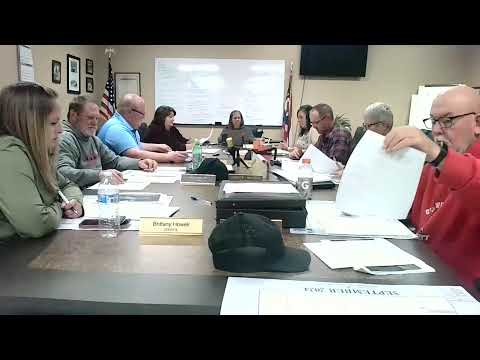
At the Oct. 28 West Lafayette village council meeting, the director of the county children’s-services agency told the council and the public that a one-mill, five-year replacement levy on the ballot is necessary to offset sharply rising placement costs for children the agency has custody of.
The presenter said placement costs have risen about 175% statewide since 2017 and that, as of the most recent Friday, his agency had 63 children in custody. He said the agency has no discretion to refuse court-ordered placements and projected total placement costs for the year of roughly $2.5 million to $2.6 million. “We’ve paid $1.8 million already,” he said, “and we’re still going.”
Why it matters: the presenter said the current levy was set in 1995 and collects on that tax base; it generates about $400,000–$450,000 a year under today’s collection rates, and replacing it would boost collections to better reflect current property values. He emphasized the levy dollars would be used only for placement costs — room and board, facility placement, specialized services and transportation — and not for staff wages or benefits. “This money specifically goes for the care of the kids we have — that is it,” he said.
The official gave a range for daily placement costs, saying they can vary dramatically depending on clinical need and setting: “it goes from $25 to $800 plus dollars a day per child,” and he described situations in which children must be placed far from home when local capacity is exhausted, requiring travel and extra oversight. He described using grant programs and partnerships — including Ohio Start and Ohio Rise — to help leverage state and federal funds but said local levy dollars are still needed to unlock or supplement outside funding.
He also addressed common misconceptions directly: he disputed claims that Medicaid pays for all placement-related costs and called rumors that workers receive incentives to remove children “ridiculous.” He characterized the levy as a necessary, not discretionary, tool to meet court-ordered obligations: “If a child is being abused or neglected, we’ve got to respond and we’re going to respond,” he said.
The presentation included examples and appeals to local taxpayers: the director demonstrated how assessed value (the tax base) differs from market value and offered to help residents use the county auditor’s website to estimate how the replacement levy would affect individual bills. He told residents the replacement levy is intended to “catch us up to a true market value” and that for many homeowners the annual increase would amount to a small monthly amount.
No formal council action on the levy was taken during the meeting; the director urged residents to vote and to consult the agency’s public information channels for more detail.
What’s next: the replacement levy would appear as a ballot measure (the presenter described it as a one-mill, five-year replacement). The official encouraged voters to review household impacts using local assessment tools and to contact his office with questions.