Get Full Government Meeting Transcripts, Videos, & Alerts Forever!
Get email alerts on the Metering topic
No spam. Unsubscribe anytime.
Lordstown board hears Metron pitch for cellular water meters, OKs engineering estimate and explores OPWC funding
Summary
Metron presented a plan to replace the village’s residential registers with cellular‑connected registers tied to its Waterscope portal; the board voted to authorize an updated engineering estimate and directed staff to pursue Ohio Public Works Commission (OPWC) funding options.
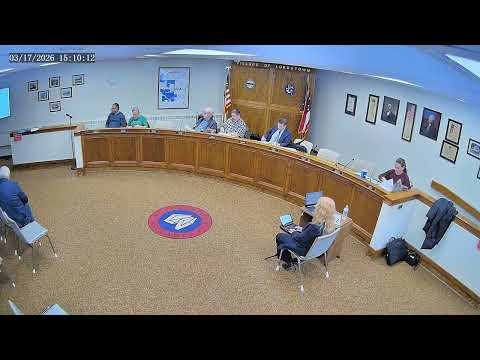
The Village of Lordstown Board of Public Affairs on March 17 heard a presentation from a Metron representative about converting the village’s residential water registers to cellular registers and using Metron’s Waterscope web portal for remote reads and data analytics. The board then voted to authorize an updated engineering estimate and directed staff to explore OPWC funding for a remetering project.
Metron’s presenter described the company’s pilot installations and the data capabilities of Waterscope, saying, “install it today, read it tomorrow on our Waterscope web portal.” He told the board the technology delivers one‑minute interval data, enables daily monitoring and profiling of fixture types, and that Waterscope is included with the register purchase. Metron proposed two purchasing options: a 10‑year plan and a 1‑year plan. For the quoted quantity (1,267 registers) Metron presented a 10‑year package price of $551,390 and a 1‑year upfront package of $434,030 plus shipping; Metron said there are no separate hosting fees and that the register includes 10 years of cloud storage under the 10‑year plan.
Board members asked detailed questions about warranties and installation practices. The presenter said the meter body carries a 20‑year warranty, measuring element accuracy is warrantied for 10 years, and registers have a 10‑year replacement warranty with a prorated warranty after that. He described indoor installs as more time‑consuming and typically $100–$125 per install, while most outdoor retrofits cost roughly $70–$75 because they do not require appointments or water shutoffs.
Several members pressed on funding paths. Staff noted OPWC and other state programs could provide partial grants or low‑interest loans; timelines discussed included an OPWC pre‑application cycle in August and potential funding decisions the following year. The board moved to “authorize Hernandez to update their engineering cost and start to approach OPWC with the fundings available.” The motion was made by Christopher Peterson and seconded by Michael Sullivan; the chair called for a voice vote and said, “Motion passed.”
What it means: The motion does not commit the village to a purchase. It authorizes an updated engineering estimate and authorizes staff to pursue state funding options and a formal project scoping process. If the village proceeds, next steps include an engineering scope and cost estimate, potential grant/pre‑application filings, and later procurement steps (formal quotes, bid/RFP if required). Metron told the board it can prepare billing interface work at no charge and supply technical specifications to support procurement or an RFP.
The board’s action positions staff to return with a refined cost estimate and funding options for future consideration and for council approval if the project advances.