Get Full Government Meeting Transcripts, Videos, & Alerts Forever!
Get email alerts on the Data Centers topic
No spam. Unsubscribe anytime.
Ohio lawmakers propose six‑month commission to study data‑center impacts
Summary
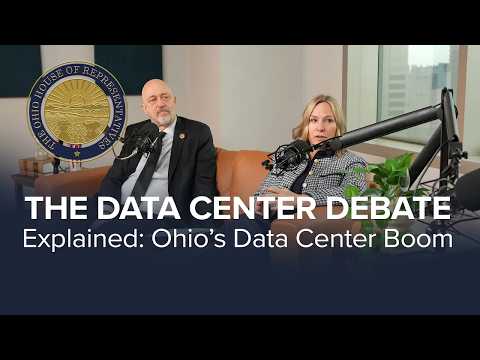
State Representatives Kelly Deer and Gary Click said House Bill 646 would create a six‑month commission with at least four public hearings to study water, energy, land‑use, workforce and tax impacts of data centers in Ohio and produce a report with recommendations and best practices.
State Representatives Kelly Deer and Gary Click told listeners that they will advance House Bill 646 to create a six‑month data‑center study commission that will hold at least four public hearings and develop a report, recommendations and best practices for state and local officials.
The representatives framed the commission as a fact‑finding response to a recent surge of constituent concerns as projects expanded from urban into rural parts of Ohio. They described data centers as “warehouse‑style” buildings that store and process the computing infrastructure behind cloud services and artificial‑intelligence tools and said communities have raised questions about water and energy use, noise and light pollution, local tax effects, and job impacts.
The bill, as described on the program, would establish a 13‑member commission with appointments by House leadership, Senate leadership and the governor’s office. The membership is expected to include four legislators and representatives from local government, utilities (including rural electric cooperatives), economic development and township governments so that a broad set of stakeholders and technical experts can provide input.
According to the representatives, the commission’s work is structured to include at least four public hearings: two hearings focused on experts (agriculture, energy, workforce development and similar fields) and two hearings open to the general public. The commission’s deliverables would include a public report answering the commission’s questions, legislative recommendations if members determine statewide rules are appropriate, and a set of best practices (for example, prioritizing brownfields or behind‑the‑meter generation where suitable).
On local authority, the representatives emphasized that land‑use and zoning decisions remain functions of municipal and township governments. They said the commission’s recommendations are intended to give local leaders and residents clearer standards for evaluating proposed projects rather than to preempt local decision‑making.
The lawmakers addressed calls for a statewide moratorium on data‑center construction, saying such a moratorium would likely run into legal challenges because of Ohio’s home‑rule protections and could be tied up in court for a year or more. They presented the study commission as a more practical approach to gather evidence and produce guidance in a shorter, structured timeframe.
The representatives also discussed economic drivers that make Ohio attractive to data‑center developers: abundant water resources connected to the Great Lakes, available rural land, local building trades and workforce capacity, and past tax incentives. They referenced figures cited by business groups—roughly $2.5 billion in tax breaks that proponents say generated about $5.2 billion in revenue—but described those numbers as part of an ongoing debate about incentives.
Both representatives said they expect the House to move quickly: they described plans to vote the bill out of the House the day of the recording and for the Senate to expedite consideration. They said informal commission work and appointments could begin immediately so the six‑month study timeline can be met, even allowing some preliminary hearings before an effective date.
Next steps: the representatives said they expect expedited House passage and then Senate consideration; the recording did not include a formal roll‑call vote or final action on the bill.