Get Full Government Meeting Transcripts, Videos, & Alerts Forever!
Get email alerts on the Storm Water Infrastructure topic
No spam. Unsubscribe anytime.
Municipal officials urge clearer law and steady reserves as committee hears statewide storm‑water briefing
Summary
Wyoming municipal leaders told the Select Water committee that storm‑water systems are fundamental infrastructure and urged statutory clarification so communities can use service‑based enterprise funds and depreciation reserves without unintended legal limits. The committee formed a stakeholder work group to draft clarifying language before August.
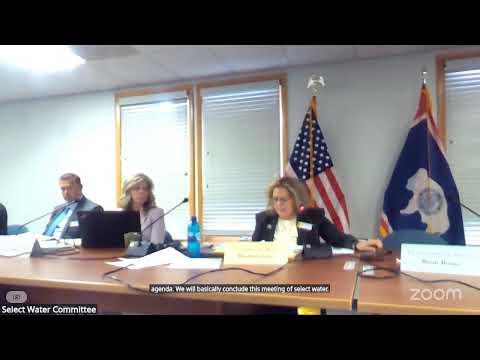
Ashley Harpstreet, executive director of the Wyoming Association of Municipalities, told the Select Water interim committee on May 7 in Cheyenne that storm water is a statewide infrastructure and public‑safety responsibility and that municipalities need lawful tools to fund and plan for long‑term capital replacement.
"This discussion is larger than one city," said Mayor Matt Murdoch of Pinedale and president of WHAM. He told the committee that while communities agree fees and reserves are needed, confusion between Title 15 and Title 16 of state law is creating uncertainty about whether ordinary municipal storm‑water systems can continue to use rate‑supported enterprise approaches.
The presenters, including Jennifer Wade (finance director, Laramie) and Mark Harris (city attorney, Evanston), framed the issue around two core points: (1) enterprise or rate‑supported funds are designed to match the cost of providing a service to its users and to build depreciation reserves for predictable long‑term capital work; and (2) local systems across Wyoming use a mix of user fees, reserves, grants and loans, and those mechanisms can look very different from one community to another.
Wade walked the committee through the accounting concept often called a "depreciation fund," explaining it is intended to be a capital reserve for replacements and additions and is distinct from short‑term emergency reserves. She said there is no single correct reserve target for every community — a small rural town and a city with an upcoming treatment plant will need very different planning horizons.
Local examples underscored the scale of need. Christa Johnston, Casper public services director, said a 2013 master plan identified $46 million in priority projects then and that, accounting for system defects and inflation, Casper’s combined needs exceed $78 million. Mark Harris described Evanston’s model, noting developer responsibilities (construction and one‑year warranty), subdivision acceptance, and a mix of per‑acre land‑development fees and a monthly per‑water‑connection charge (Evinston’s current storm‑water enterprise monthly fee was given in testimony as $5.30 per water connection). Tony Tolstead, speaking for Cody, summarized a recent study putting a 10‑year capital need at roughly $29 million and current reserves around $600,000.
Several presenters said municipalities have paused or rescinded local storm‑water billing when public outcry or legal uncertainty arose. Laramie officials recounted that a fee adopted last July was quickly paused and refunded and that the city subsequently repealed the ordinance pending clearer statutory direction.
On the legal question, witnesses and members repeatedly pointed to the overlap between Title 15 powers and the 1995 storm‑water utility statute in Title 16. Representative Test asked about the original intent of the Title 16 statute and whether Title 15 historically covered these activities; witnesses said the creation of Title 16 aimed to provide a tool for formally created storm‑water utilities but that the statutory boundary remains a point of contention.
After public comment from municipal grant specialists and local business groups, Chairwoman Lally said the committee will form a legislative‑stakeholder work group (including Senator Crum, Senator Grew and Representative Chestic, plus municipal representatives) to develop narrowly tailored draft statutory language. The chair said the group will aim to present a bill draft at the committee’s August meeting.
Why it matters: storm‑water systems have rising capital needs that many communities are not funding through general taxation; without clear authority to use service‑based rates and reserve funding, cities and towns risk deferring work that poses public‑safety and property‑damage risks.
The committee’s next steps are to convene the promised work group to (a) reconcile the Title 15/Title 16 tension, (b) preserve voter approval where statutorily required, and (c) clarify the ordinary municipal authority to use enterprise funds for storm water. The committee did not vote on statutory language at this meeting.