Get Full Government Meeting Transcripts, Videos, & Alerts Forever!
Get email alerts on the Municipal Finance topic
No spam. Unsubscribe anytime.
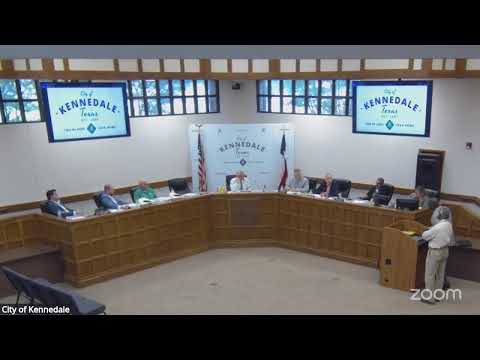
Kennedale council reviews $5 million bond plan and debate over 20‑year term for $2.3M ladder truck
Summary
At a June 15 workshop, Kennedale officials reviewed a proposed $5 million bond package that would fund a 107‑foot ladder (quint) truck estimated at $2.0–$2.3 million and other infrastructure; finance advisers projected interest in the mid‑4% range and council members weighed 10‑ versus 20‑year amortizations and grant contingencies.
At a June 15 workshop, the Kennedale City Council heard a presentation on a proposed $5,000,000 bond package that would finance capital projects and public‑safety equipment, including a $2.0–$2.3 million ladder (quint) truck.
The city’s municipal finance advisor, Jack McLaney of Samco Capital Markets, told the council the team’s "latest preliminary numbers we've ran were at 4 and a quarter percent interest rate" and said the market could land closer to about 4 percent if the city issued bonds immediately. McLaney explained the issue in practical terms for members comparing amortization choices: he projected roughly $2,486,000 in total interest on a full 20‑year schedule versus about $2,107,000 with a 10‑year amortization on the truck portion — a difference McLaney described as roughly "$350,000" over the life of the debt.
Why it matters: the council must weigh the long‑term cost of interest against the principle of matching debt terms to the useful life of assets. Several council members expressed reluctance to finance a vehicle for 20 years if the apparatus will likely operate as a frontline unit for a shorter span.
Chief Peterson, speaking for the fire department, cited industry guidance on apparatus rotation and service life: "the general rule of thumb from the National Fire Protection... 0 to 15 years [as] first‑line response, and then at the 15 to 20 year, they recommend going to reserve status." He also outlined operational details: a delivery and build timeline of about 36–44 months, a required deposit of roughly 10 percent to commit an order and the department’s minimum daily staffing model.
City Manager Daryl Hall and finance staff framed the trade‑offs differently. Hall noted that financing an asset over its full service life "spreads the tax burden of that asset across all of the citizens that then reap the benefit" and pointed to the city's recent upgrade in S&P rating as a factor in favorable pricing. Staff and the advisor warned council members not to rely on hypothetical future grants as the primary justification for selecting a longer amortization.
Council members asked whether the city would issue the full $5,000,000 at once and how allocations over time could affect rates; McLaney said the issue goes to market as a single offering then is sold in maturities, so allocating the proceeds across purchases would not change the original interest pricing. McLaney also noted a "notice of intention" related to the bond was scheduled for the following day.
No formal vote was taken during the workshop. The council and staff plan further discussion at the next meeting, where members said they expect to revisit the bond structure and the ladder‑truck financing decision.