Get Full Government Meeting Transcripts, Videos, & Alerts Forever!
Get email alerts on the Civic Transparency topic
No spam. Unsubscribe anytime.
Residents press Red Hook board for earlier packet release; raise concerns about Boat Club legal costs and policing disparities
Summary
During public comment residents urged the board to restore early public comment and release meeting packets sooner; speakers raised concerns about costs tied to the Red Hook Boat Club eminent domain matter and about police tax disparities between village and town households.
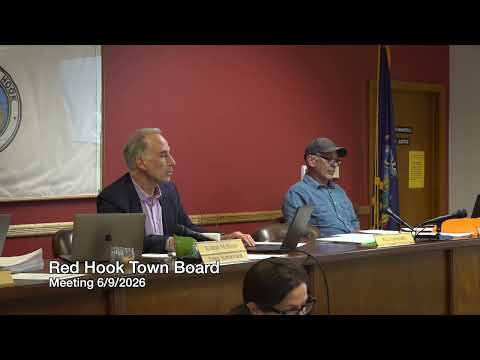
Residents used the public‑comment period at the start of the June 9 meeting to press the town board on transparency and budget priorities.
Roxan Fisher opened the session, thanking the board for moving public comment to the beginning of the meeting and urged making that change permanent so residents can influence decisions before votes are taken. Fisher also criticized ongoing legal spending tied to the Red Hook Boat Club eminent domain acquisition and said a board member who originally voted for the acquisition could rescind that vote to "bring an end to these ongoing exorbitant legal proceedings and stop the drain on our tax base." The board did not take action on that claim during the meeting.
Francis Zuku, speaking as a town resident and a village trustee, said the village tax burden for police is disproportionately high and supplied figures — for a home assessed at $430,000 he said a village homeowner pays roughly $730 per year for police while a town homeowner outside the village pays about $41 — and suggested the town explore a townwide police force or a shared‑services study. Staff and the grants consultant referenced possible shared‑services grant programs that could fund a study, but no plan was adopted.
Vincent Deco reopened the packet timing point, asking for a clear deadline for final packets; staff acknowledged practical staffing limits but agreed to label last‑minute additions as addendums and to identify what has changed from prior packet versions to help members prepare.
Why it matters: residents framed packet release timing as a substantive transparency issue that affects the public’s ability to provide oversight and correct errors before votes. They also used public comment to raise budget‑pressure issues — legal costs and policing costs — that could influence future agenda items and grant or budget decisions.
What’s next: the board agreed to show changes between packet versions as addendums and to attempt clearer notification of when material is posted, and residents asked the board to bring the water district parcel-sale/CPF question back for a fuller review at the next meeting.