Get Full Government Meeting Transcripts, Videos, & Alerts Forever!
Get email alerts on the Grants topic
No spam. Unsubscribe anytime.
Red Hook weighs state grant options to fund TND sewer/water, trails and downtown projects
Summary
A grants consultant outlined multiple state programs (CFA, DRRI/New York Forward, ESD, EFC, OPRHP and targeted grants) and urged the town to form a working group with the village to assemble multi-project applications for the TND corridor, sewer/water extensions and recreation projects.
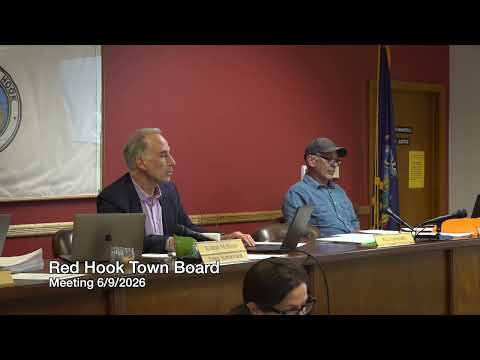
Red Hook’s consultant on June 9 walked the town board through a range of state grant programs that officials could pursue to reduce the cost of sewer and water extensions in the Traditional Neighborhood District (TND) and to support downtown and park projects.
Brandy Nelson, the town’s grants advisor, told the board that Consolidated Funding Application (CFA) programs and separate initiatives such as the Department of State downtown revitalization programs (DRRI/New York Forward) and Empire State Development (ESD) infrastructure grants can be combined if the town presents a cohesive multi‑project vision. She urged formation of a town‑village working group to decide the geographic scope and candidate projects — for example sewer and sewer‑adjacent water connections in the TND, trail links (the Wreck Park connector), historic façade work at the village four‑corners, and a potential hotel site south of Hannerford.
Key deadlines and mechanics: Nelson noted that many CFA subprograms are due July 31 (some programs have different cycles or are rolling) and that a DRRI designation requires a more expansive application and public/private partnerships but yields prioritization on subsequent CFA submissions. She also highlighted smaller, targeted opportunities such as New York Kicks funds for soccer fields (approx. $200,000), OPRHP grants for trail construction and EFC/IMG financing or low‑interest loans for sewer projects.
Why it matters: several infrastructure projects on the town’s horizon — particularly sewer extensions already tied to the village’s planned sewer plant upgrade — could be partially funded by a mix of grants and low‑interest financing. Establishing a collaborative application with the village could expand competitiveness and leverage private matching funds, Nelson said.
Board next steps: staff will compare program eligibility against project lists, identify which grants require municipal resolutions, and prepare any applications that could be filed in the current CFA cycle. The board also discussed using earlier or cloned applications as a starting point where permissible.
Attribution: Grant program descriptions and eligibility details quoted in this article are drawn from the consultant’s presentation and questions from board members during the June 9 meeting.