Get Full Government Meeting Transcripts, Videos, & Alerts Forever!
Get email alerts on the Community Resilience topic
No spam. Unsubscribe anytime.
University researchers present photo‑mapping project to Council, seek local partners for statewide resilience map
Summary
Dr. Jean Garrison told the Workforce Development Council her team gathered about 900 photo‑narratives documenting barriers and opportunities to education, employment and community resilience and has produced an interactive map and upcoming phone app for broader participation.
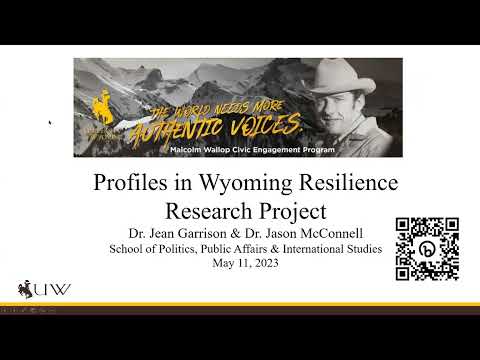
Dr. Jean Garrison, a researcher at the University of Wyoming’s School of Politics, Public Affairs and International Studies, presented early results from the Wyoming Resilience Project to the Workforce Development Council in Rock Springs. Her team gathered roughly 900 image submissions from Wyoming and surrounding states to document community perceptions of barriers and opportunities in education, employment and resilience.
Garrison described the project’s photovoice methodology—asking residents to submit photos and short narratives about local challenges and assets—and showed an interactive map that lets viewers filter submissions by county, economic region and community‑college district. "Phase one we gathered 900 image submissions from Wyoming and surrounding states," she said, noting the dataset also includes accompanying participant explanations.
The project’s immediate goal, Garrison said, is to give policymakers and local stakeholders richer, place‑based context that can inform program design and economic development. She described a forthcoming phone app, scheduled for completion by July 2023, that will let volunteers and community partners upload photos directly from smartphones and map them to county and regional views.
Council members asked whether the project plans to use social platforms to boost participation and how it will work with K‑12 teachers. Garrison said social sharing may increase visibility but that local partnerships—classrooms, Rotaries, chambers of commerce—produce higher participation. She also described work with the university’s institutional review board and consent forms to enable safe classroom participation by people under 18.
Several council members volunteered local contacts and outreach help. Ron Wild suggested sending a brief article and sample images to the Council newsletter; Representative Ryan Burer and other members offered to host presentations in their districts. Garrison said the next phase will emphasize teacher partnerships to capture youth voices and to create community profiles that local governments or chambers of commerce could adopt.
The presentation did not ask for Council funding; presenters said they welcome partnership commitments and will share materials on request.