Get Full Government Meeting Transcripts, Videos, & Alerts Forever!
Get email alerts on the Land Development Regulations topic
No spam. Unsubscribe anytime.
Planning board endorses several LDR updates to speed approvals, add administrative relief and clarify alley setbacks
Summary
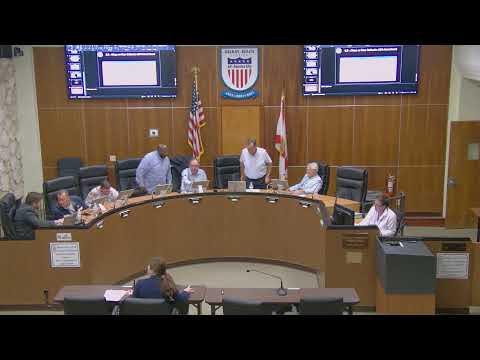
On June 15 the Delray Beach Planning & Zoning Board recommended approval of three city-initiated land-development regulation amendments: ordinance 33-26 (approval-expiration dates), ordinance 32-26 (director/DSMG authority), and ordinance 31-26 (apply rear setbacks to side lot lines adjoining alleys). All recommendations were unanimous.
The Delray Beach Planning & Zoning Board recommended approval of a package of city-initiated amendments to the Land Development Regulations on June 15, voting unanimously to forward three ordinances to the City Commission.
Ordinance 33-26 would change approval-expiration rules: site plans for fee-simple townhouse developments with a recorded plat would be valid for 24 months from the date of recordation (with a 24-month extension possible), and site plan approvals for city and Delray Beach Community Redevelopment Agency properties would be valid for five years. Staff said the change aims to reduce the risk that city-initiated projects must be reapproved because of procurement, budget or emergency delays.
Ordinance 32-26 proposes procedural streamlining by giving the director authority to grant relief tied to right-of-way dedications (a power currently exercised by the Development Services Management Group, DSMG) and modestly expanding DSMG authority in limited cases (for example, to allow small deviations where legacy trees or existing utilities constrain construction). Board members supported the streamlining but asked that easements (beyond utility lines and legacy trees) be included in the amendment; the board’s recommendation includes that clarification.
Ordinance 31-26 would clarify setback treatment for lots with alley adjacencies by applying the rear-setback standard (typically smaller) to side-lot lines that adjoin alleys, instead of treating those sides as full side-street setbacks. Staff said the change addresses older, smaller lots where treating alleys as side streets produced overly constrained development; members asked staff to confirm landscaping and parking effects and staff said landscape rules remain applicable and that rear setbacks are unchanged in general.
Each ordinance drew technical questions but no sustained opposition. The board recorded motions and unanimous roll-call recommendations for all three ordinances; each item will proceed to the City Commission for final action.