Get Full Government Meeting Transcripts, Videos, & Alerts Forever!
Get email alerts on the Infrastructure Water topic
No spam. Unsubscribe anytime.
Norwalk water project draws complaints about contractor use of town property and poor communication
Summary
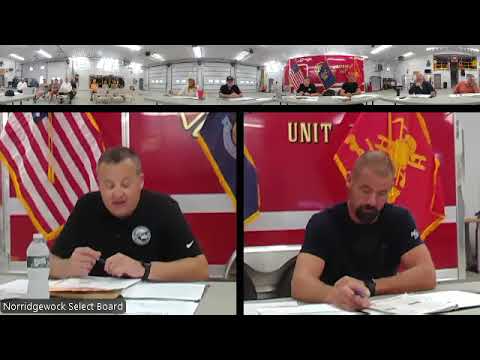
Selectboard members and the Norwalk Water District clashed over a recent transmission-main project after a contractor used town property for a laydown yard and posted an unauthorized “local traffic only” closure, prompting calls for better communication and clarified contract terms.
Selectboard members and Norwalk Water District representatives clashed over construction practice and communication during an update on recent transmission main projects.
The dispute focused on a contractor who used town property as a laydown yard and, according to several board members and a town official, placed signage that restricted traffic without prior town approval. A resident complained that a contractor “wanted to pay $1,000 to leave the trailer there on the edge of the road” and later said the contractor sought $5,000 for a local sign, a figure that prompted sharp pushback from board members and Town Hall staff. The town manager said the “local traffic only” signs were placed without permission and he ordered them removed.
“They told me those signs had to go,” a resident said during public comment, describing confusion and a bumpy start to the project. The town manager later told the board the contractor had not sought authorization to close the road to through traffic and that the engineering firm was asked to remove the signs immediately.
Water-district staff emphasized the technical and funding drivers that shaped the work. A district representative said the authority secured two separate grants, including a Department of Transportation award reported in the meeting as “over a million dollars” and a 30% forgiveness component, and that the projects replaced aging mains that leak and pose operational risks. The representative added the district had limited ability under funding rules to pay for road overlays and said the district added about $12,000 in change orders to better match pavement where the trenching occurred.
District staff also described the construction constraints that cause predictable delays: temporary mains must be pressure-tested, superchlorinated and held for 24 hours before testing again, which can consume several workdays. The district also noted it will complete an 11-month warranty inspection and that a 12-month performance bond remains in place.
Board members said communication failures — not engineers or funding mechanics — were the root problem. One member said the contractor “never communicated anything with the town,” and worried the town’s ratepayers and taxpayers had not been adequately represented when the contractor sought to alter traffic controls.
The water district acknowledged lapses in communication and said it will improve coordination with the town during future planning and bidding phases. The board asked district staff and the town manager to coordinate closely on upcoming projects and to agree in advance on traffic-control plans and any use of town property.
Next steps: the district will carry out the formal warranty inspection next summer; the board will expect clearer advance notice and a single point of contact for future water projects.