Get Full Government Meeting Transcripts, Videos, & Alerts Forever!
Get email alerts on the Zoning Amendment topic
No spam. Unsubscribe anytime.
Planning commission backs zoning change to allow dwellings in select commercial districts
Summary
The Hot Springs City Planning Commission unanimously recommended that the Board of Directors approve Ordinance D-26-129 to allow certain single- and multi-family dwellings in specified commercial zones, a change staff says will enable 'missing middle' housing and support neighborhood revitalization. The board will consider the measure July 7.
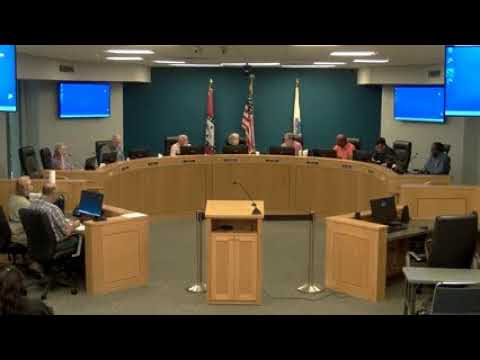
The Hot Springs City Planning Commission on June 11 voted to recommend that the Board of Directors approve Ordinance D-26-129, a text amendment to Ordinance 6513 (Hot Springs Code Title 16, Chapter 2) that would permit a range of dwelling types in several commercial zone districts.
Director Selman presented the staff report, saying the 2025 zoning code removed dwellings from many commercial zones to preserve space for commerce but that change had produced “unintended problems for land owners seeking to develop much-needed housing.” The amendment would restore a variety of residential uses — including detached and attached single-family, townhouses, two-family homes, above-ground-floor units, and multifamily buildings — to CN (neighborhood commercial), CMU (commercial mixed use), and CG (general commercial) zones, and would allow three-or-more-unit multifamily dwellings in CR (regional commercial) districts.
Why it matters: Staff framed the amendment as implementing the city’s housing strategy and Forward Hot Springs 2040 comprehensive-plan goals to enable ‘missing middle’ housing and revitalize older commercial properties near neighborhoods that have experienced demolition and population loss. “Surrounding downtown are thriving and livable neighborhoods that have new vibrancy with diverse people of all ages,” Selman quoted from the plan when describing the policy rationale.
Commission discussion focused on geography and intent. Commissioners asked whether the change primarily affects areas adjacent to downtown; staff answered that the targeted parcels are older commercially zoned properties immediately adjacent to legacy neighborhoods and that the amendment essentially “resets the table of uses” to their prior status to create more housing sites while supporting existing businesses.
Action and next steps: After closing the public portion, the commission called the roll and recorded unanimous support from commissioners present, forwarding the recommendation to the Board of Directors. The board is scheduled to consider the ordinance at its July 7, 2025 meeting.
The commission’s report stated the amendment would be implemented via a revised use matrix (Exhibit A / Table 8‑1) and any necessary text changes required under code section 16‑214.1. The staff report said the proposal creates no new nonconformities and meets the approval standards in the zoning code.