Get Full Government Meeting Transcripts, Videos, & Alerts Forever!
Get email alerts on the Budget topic
No spam. Unsubscribe anytime.
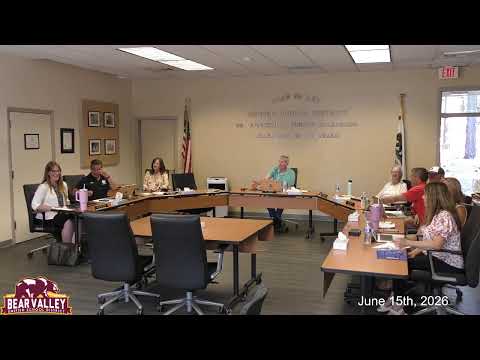
Budget presentation projects a $1.1 million surplus for 2026–27, highlights one‑time revenues and fund shifts
Summary
District staff presented estimated actuals for 2025–26 and projections for 2026–27: flat enrollment and ADA ~92.1%, a 4.31% COLA, shifts in one‑time funds and a projected $1.1M surplus for 2026–27 driven by discretionary grants and RDA transfers.
The district’s budget presenter summarized estimated actuals for 2025–26 and projections for 2026–27, telling trustees that enrollment has been flat, ADA is about 92.1 percent, and LCFF revenues increased in part because of a 4.31 percent cost‑of‑living adjustment (COLA).
Presenter explained expenditures increased for certificated and classified salaries (roughly 5 percent) because of recently negotiated off‑schedule agreements with two bargaining units, and noted an overall increase in services and other expenditures largely tied to special education and expanded programs. He said the district’s estimated actuals show an ending fund balance a little over $7.0 million for the 2025–26 year and that the previously projected deficit narrowed to about $2.2 million in estimated actuals.
Looking ahead, the presenter said the 2026–27 budget is projected to show a surplus of about $1.1 million, driven in part by one‑time revenues and the expected discretionary block grant the district anticipates receiving (the presenter cited an anticipated $1.8 million in discretionary dollars). "That is 1 time funding, but that will do a lot to relieve our bottom line," the presenter said.
The presentation reviewed restricted and other funds: RDA (resource 98‑12) revenues and transfers are funding capital projects including a bus drop‑off improvement (~$73,000), a maintenance and operations building purchase and turf installation at Big Bear High School; the district also noted timeline shifts for an ELOP portable and related RDA capital work. Child Nutrition (fund 13) is projected at roughly $2.2 million revenue and $2.3 million expenditures with an ending balance just over $1 million; the presenter said that program recently passed an audit.
Staff discussed deferred maintenance (fund 14), health and welfare reserve (fund 17), developer fees (resource 98‑13) and a $300,000 tech refresh transfer into the capital fund (fund 40) that may be reallocated depending on curriculum needs and device strategies. The presenter said some expenditures originally planned for 2025–26 were shifted to 2026–27, which altered year‑to‑year comparisons.
On multi‑year assumptions, the presenter said the district projects a small enrollment decline in later years (about 10 students), noted that incoming enrollments increasingly include higher‑cost IEP placements and described planned use of attrition to right‑size staffing rather than layoffs. He also described required reserves (4 percent) and an "unassigned/appropriated" bargaining cushion projected at about $484,000 for 2026–27.
Board members pressed for project lists and clarifications on architect/DSA fees, turf timing and whether certain architect costs were duplicated; staff agreed to follow up with detailed lists and corrected slides.
Next steps: staff will provide requested follow‑up materials (capital project lists and corrected fund slides) and present the budget package for board adoption in the coming days.