Get Full Government Meeting Transcripts, Videos, & Alerts Forever!
Get email alerts on the Budget topic
No spam. Unsubscribe anytime.
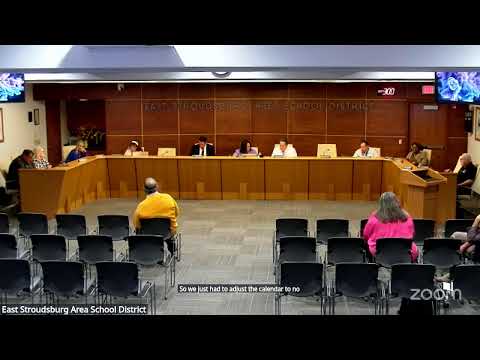
East Stroudsburg board adopts $213.4M budget, approves 5% proposed real-estate tax increase
Summary
The East Stroudsburg Area School District board approved the 2026-27 general fund budget of $213,408,979 after presentations showing a multi‑year decline in reserves; the budget includes a proposed 5% real-estate millage increase expected to raise about $5.0M in local revenue and preserves a homestead/farmstead exclusion.
The East Stroudsburg Area School District board on June 15 approved the district’s 2026–27 general fund budget at $213,408,979 and endorsed a proposed 5% real-estate tax increase to help close a growing structural shortfall.
District revenue and expenditure leaders told the board the proposed tax increase would generate roughly $5.0 million in local revenue while state funding increases—chiefly the Ready to Learn block grant—account for an additional roughly $5.0 million in state revenue. Mirabelli, presenting the revenue side, said the district’s median homeowner in Monroe County would see an estimated annual increase of about $278 and roughly $281 in Pike County under the board’s preliminary calculation.
The finance presentation and subsequent discussion stressed the district’s multi-year erosion of reserves. Krause, presenting expenditures, said the district recorded about a $10.3 million audited deficit in 2024–25 and projected deficits that would reduce the general fund balance from roughly $51 million in June 2024 to about $10.5–$10.7 million by June 30, 2027 if the proposed budget stands. He highlighted notable cost pressures, including an estimated $5.8 million (about an 18.3%) increase in health-insurance costs and higher debt service attributable to both prior restructuring and the transaction under consideration.
“Anytime we talk about increasing taxes, we need to be cognizant of whom those taxes impact,” Mirabelli said, noting the board made a decision to recommend using the state Act 1 index. He also reviewed options for taxpayers to calculate personal impacts using county assessed-value searches linked in the posted budget materials.
Public commenters pushed back. A resident who identified himself as John called the plan a “con” and urged the board to reconsider fiscal causes outside the district; Danica, a second commenter, asked for clarification about the debt restructuring’s long‑run cost and urged the board to examine rising employee benefits costs. “So we’re just doing a we’re trying to fix a short term problem, but the long term is a $805,000 cost,” Danica said, paraphrasing the restructuring analysis. Board members responded with questions about federal and state revenue outlooks and reiterated that some funding is deferred under state accounting rules.
The board also adopted the formal homestead and farmstead exclusion resolution for the 2026 tax year, which the district estimated would permit a maximum tax-credit reduction of $778.80 for each approved homestead/farmstead. Chair Rosado urged homeowners who are unsure how to apply to contact the district for assistance.
The budget vote was taken by roll call; the board approved the 2026–27 general fund budget as posted and advertised and authorized the administration to implement the plan.
What’s next: The board will appoint two community representatives to a newly formed citizen advisory committee at the July meeting to advise on community outreach and budget communication. The district said applications for that committee close in mid‑July.