Get Full Government Meeting Transcripts, Videos, & Alerts Forever!
Get email alerts on the Rotary Transportation topic
No spam. Unsubscribe anytime.
State Rep. Simon Catalo calls Route 2/Rotary redesign an "economic justice issue," urges public input
Summary
State Rep. Simon Catalo told Concord's DEI Commission the Route 2/Rotary project is an "economic justice issue," cited MassDOT data he summarized as a 30–60% commuting-time reduction for some drivers under an above-grade option, and urged residents to attend upcoming MassDOT sessions, including a June 24 forum at the middle school.
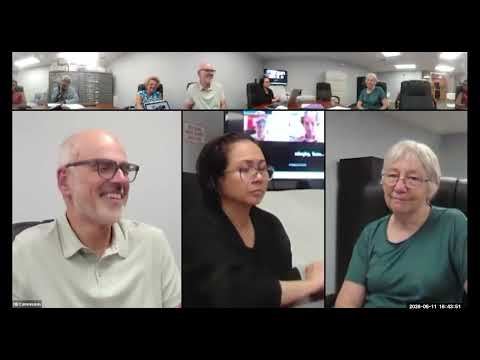
State Representative Simon Catalo told the Concord Diversity, Equity, and Inclusion Commission on June 11 that the Route 2/Conquered Rotary redesign should be treated as "an economic justice issue" and urged sustained, grassroots participation in MassDOT's public process. "This is an economic justice issue," Catalo said, adding that MassDOT modeling shows some drivers could see a "30 to 60% reduction" in commuting time under the preferred above‑grade options.
Catalo, who attended the meeting in person, said he had heard "very emotional testimony" from residents west of town who feel excluded by current traffic patterns and emphasized that improvements to the rotary could affect housing plans at the former MCI site. He asked local groups to surface concise facts — for example, the 30–60% estimate — so his office and town communication channels can amplify those data points.
Why it matters: The Rotary project intersects transportation, housing and equity. Commissioners raised concerns about how older adults, residents with disabilities, pedestrians and cyclists would be served by any redesign. Catalo and other meeting participants said that improved commuter-rail frequency and complementary local transit would be required to realize equitable benefits if housing density increases at the MCI parcel.
Public input and next steps: Participants said MassDOT will hold another public input session and that the agency will select among variations based on feedback. A town participant reported a MassDOT forum set for June 24 at 6:00 p.m. at Conquered Middle School where alternatives will be presented. Commissioners were told there are several studied iterations (three to four designs discussed publicly) and that MassDOT has modeled likely traffic impacts for those options; local suggestions can lead to adjustments but within limits tied to existing studies.
Accessibility concerns: Commissioners pressed how accessibility needs (walking, biking, aging residents, people with disabilities) are being incorporated; Catalo said the plans include bike and pedestrian accommodations in several alternatives but conceded he did not have definitive answers for all user groups and encouraged residents to make targeted suggestions at the public sessions.
Housing link: Catalo and others warned that current traffic delays could harm proposed housing at the MCI parcel if left unaddressed. Some speakers said one MassDOT alternative would allow more housing on the large parking tract west of Commonwealth Avenue, but that trade-offs exist between traffic relief and land use outcomes.
What to watch: MassDOT's June 24 public forum in Concord; the formal selection of an iteration after the next input round; and local advocacy about rail service frequency and specific accessibility features. The commission recommended that members and constituents attend public sessions and supply succinct, shareable data points for broader outreach.
Quote: "This is an economic justice issue," State Representative Simon Catalo said. "We have a moment to make connectivity and economic opportunity possible for people who live west of here."