Get Full Government Meeting Transcripts, Videos, & Alerts Forever!
Get email alerts on the Adu Loan topic
No spam. Unsubscribe anytime.
Napa County details forgivable ADU loan: who qualifies, how much it pays and how forgiveness works
Summary
Napa County staff outlined an affordable, forgivable loan for accessory dwelling units (ADUs): homeowner-occupied properties in Napa County can receive base loans ($60,000 for one-bedroom, $85,000 for two-bedroom), rebates up to $10,000 for certain costs, a 3% simple interest rate if repaid early, and full forgiveness after 60 months of compliant rental.
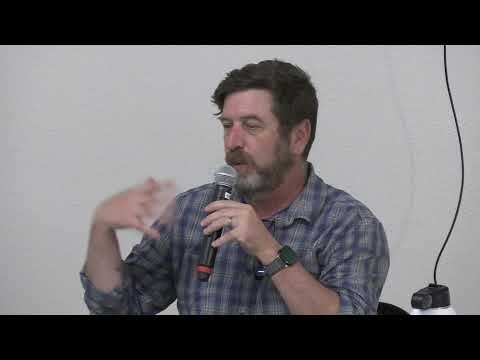
Napa County outlined the mechanics and eligibility for its affordable ADU (accessory dwelling unit) forgivable-loan program during a public session in Calistoga.
Erica Orta D'Aponce, an affordable housing analyst with the county's Department of Housing and Community Services, said the program requires that the homeowner live on the property full time, that the unit be rented at an affordable rate to an income-eligible tenant, and that the property is inside Napa County. "Our base loan is dependent on the unit size. So if you go with a one-bedroom unit, it's $60,000. A two-bedroom gets you $85,000," she said.
The program provides rebates for certain costs in addition to the base loan. Orta D'Aponce said rebates are "up to the dollar amount listed but based on actual costs" and gave an example that a permit fee of $8,000 would be covered up to an advertised cap (she cited up to $10,000 for some unincorporated-county applicants). She emphasized that the loan requires a managed construction escrow account to secure draws and that all financing must be deposited into that account prior to funding.
The county sets timelines and monitoring steps. After loan funding, homeowners have two years to complete construction and then six months to lease the unit to an eligible tenant. "Every month that the unit is leased to an eligible tenant, you receive a credit towards forgiveness," Orta D'Aponce said. She described the forgiveness calculation as monthly credits and said the loan is fully forgiven after 60 months of compliant lease time. If there are vacancy gaps between tenants, homeowners may either extend the lease period to make up lost months or pay the difference and interest for the vacancy period.
Program mechanics and limits. Orta D'Aponce said the county initially allocated $5,000,000 to the program and has spent just under $3,000,000 to date; the Board has agreed to replenish the fund annually through transient-occupancy-tax revenues. She noted that the loan does not cover every construction cost and that homeowners must cover predevelopment costs such as plans and permits before loan funding. The county requires a licensed general contractor for projects; owner-builds are not eligible for loan funding to avoid conflicts of interest.
Monitoring and tenant rules. The county sends annual monitoring requests to both homeowner and tenant to confirm continued owner occupancy and that the tenant remains income-eligible and below program rent limits. Orta D'Aponce said income limits and maximum rents follow HCD (State Department of Housing and Community Development) guidelines, updated annually; the county had just received updated 2026 limits a few days earlier. Tenants are income-qualified at lease-up and must be requalified when turnover occurs.
Tax and payoff considerations. On tax treatment, Orta D'Aponce said the forgivable loan is administered as a loan forgiven over time and that homeowners should consult a CPA for tax consequences. If a homeowner opts out before full forgiveness, the county will provide a payoff letter showing the outstanding balance plus interest. Program interest for early payoff was described as 3% simple interest in several exchanges.
Why it matters: the county describes this as a targeted, best-in-class tool to create deed-restricted affordable housing at the lot level. Orta D'Aponce said the program combines financing with technical supports and is intended to bridge the gap to increase the number of affordable rental units in Napa County. The county's ADU Center offers free pre-project consultations and a written report to help homeowners decide if building an ADU is feasible for their property.
What comes next: homeowners interested in the program should collect plans, obtain permit estimates, consult environmental health for well/septic questions, and use the ADU Center's free consultation as a first step. County staff said application-to-funding typically takes roughly two and a half months once a complete file is submitted because loan documents and audits must clear county counsel, auditors and the treasurer.