Get Full Government Meeting Transcripts, Videos, & Alerts Forever!
Get email alerts on the Solid Waste topic
No spam. Unsubscribe anytime.
Council narrows Sunshine Canyon expansion terms after marathon public hearing
Summary
After hours of public testimony on dust, health risks and groundwater concerns, the Los Angeles City Council approved a revised ordinance with a 10‑year review phasing (6A) for the Sunshine Canyon landfill expansion and rejected a 10‑year hard cap (6B). The votes were 8–7 in favor of 6A and 11–4 against 6B.
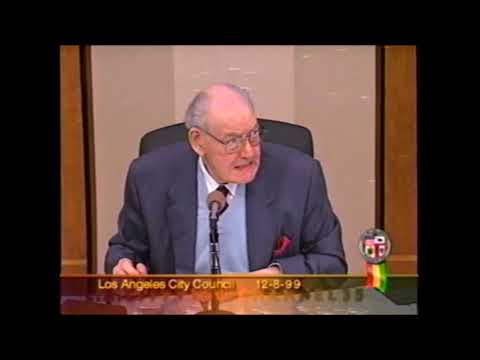
Los Angeles — The City Council on Dec. 8 approved a revised ordinance that advances plans for the Sunshine Canyon landfill while adding new oversight and a 10‑year review requirement, following an extended public hearing where residents raised health, dust and groundwater concerns.
The hearing drew scores of opponents who said the landfill’s operators previously mishandled dust and that reopening the site closer to homes and a major water filtration plant risked public health. “We have tried to work with you. Will you give us the time to study our health concerns?” Mary Edwards, a resident, told the council during public comment.
Proponents, including counsel for the applicant, said the ordinance contains an “extraordinary” set of conditions — additional monitoring, an independent air‑quality consultant and monitoring at nearby schools — designed to reduce risks. “You have in front of you a set of conditions that should be adopted and will create the best‑run landfill in America,” attorney Chris Funk said.
Council members debated competing motions over how to limit the facility’s tenure. One motion (labeled 6A on the agenda) implements a 10‑year phased review and was approved 8–7. A second alternative (6B), described in debate as a 10‑year cap that would more tightly limit operations, failed 11–4.
Several council members urged more study and suggested alternatives to further landfill use, while others said the city must plan for solid‑waste needs and that the ordinance now includes unusually strict controls, including a timetable to convert diesel truck fleets serving the site. Councilmember debate repeatedly returned to whether the ordinance language matched a previously adopted council motion and whether the planning department’s draft reflected council intent.
The council’s action does not immediately change operations; it approved the second‑reading ordinance variant 6A with the new review condition and other mitigations. Opponents signaled they would continue to press for more study and possible legal challenges. Supporters said the new conditions — monitoring, operational limits and additional mitigation — provide added protections while allowing the region’s waste‑management needs to be addressed.
The council concluded the item after tabulating votes and directing staff to implement the ordinance terms.
What's next: The ordinance returns to administrative steps for implementation, and staff will monitor compliance with the new monitoring and diesel‑reduction provisions.