Get Full Government Meeting Transcripts, Videos, & Alerts Forever!
Get email alerts on the Municipal Fees topic
No spam. Unsubscribe anytime.
High Springs launches overhaul of fee schedules and business-license rules after 30 years
Summary
Commissioners directed staff to update a 1992 ordinance of municipal fees, consider raising business-license and cemetery fees, require/earmark fire inspections, and review food‑truck rules and compact‑parking enforcement; staff was asked to benchmark neighboring cities and return with proposals.
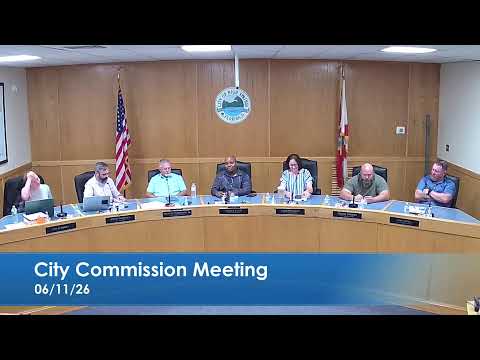
Commissioners spent substantial time reviewing the city’s fee structure, noting the current ordinance dates to 1992 and includes many rates that staff and commissioners consider outdated.
Commissioner Weiss and others urged a systematic update: benchmark fees against neighboring municipalities (Newberry, Alachua), raise low double‑digit items into more appropriate ranges, and consider a modest business‑license or occupational fee that would apply to businesses that perform work in the city. Staff suggested increasing some business‑license fees to $100 and pairing that with mandatory annual fire inspections paid to the fire department so inspection revenue would remain in that department’s budget.
Chief Peters said the city already charges annual fire‑safety inspection fees for day‑care centers and food trucks and maintains records; staff noted those revenues currently appear as line items in the fire department’s budget. Commissioners also discussed whether to relax restrictions that limit food trucks to short consecutive-day runs and whether to adopt a regional decal to reduce duplicate inspections. One commissioner asked staff to evaluate ordinance changes and the cost of equipment needed for enforcement of compact‑parking rules downtown.
Staff was directed to compile comparisons with other jurisdictions, draft simplified fee schedules (including options for flat fees vs. tiered models by business size or square footage), estimate administrative impact and revenue implications, and return to the commission with proposals for discussion and possible adoption.