Get Full Government Meeting Transcripts, Videos, & Alerts Forever!
Get email alerts on the Capital Equipment topic
No spam. Unsubscribe anytime.
Denmark committee weighs buying a wheeled excavator and a second transfer‑station compactor amid capital‑fund limits
Summary
Members debated buying a mid‑size wheeled excavator (draft budget shows $200,000) versus continued seasonal rental, and reviewed a proposal to add a second transfer‑station compactor (equipment quoted about $46,532) while noting extra costs for pads, electrical and additional containers.
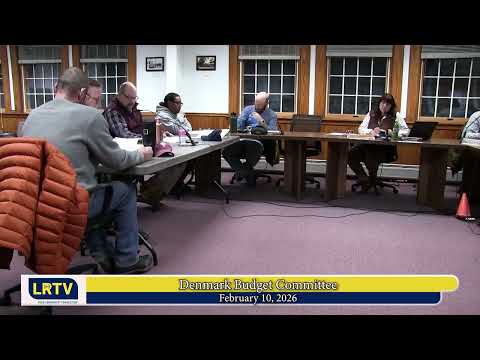
Denmark — The Select Board and Budget Committee spent part of their Feb. 10 meeting reconciling capital numbers and debating whether the town should buy a wheeled excavator or continue renting machinery as needed.
Staff said the draft capital equipment line on page 9 shows $350,000 total: $150,000 allocated to the truck/equipment fund and $200,000 for a mid‑size (12–13 ton) wheeled excavator. Earlier internal requests had listed a higher excavator figure (about $290,000), but the formal page 9 numbers reflect a reduced $200,000 request. Staff said current equipment‑fund cash is roughly $180,000–$185,000.
Some committee members argued rental remains economical — a seasonal rental costs roughly $9,000 per month and the town typically rents twice per year, while purchasing would add another vehicle to the town’s fleet to store and maintain year‑round. One member said, "If we run an excavator for two months out of the year, I think that's better than having an excavator set there for 10 months," arguing rental offers flexibility. Other members cautioned that owning a wheeled excavator provides ergonomics and versatility for in‑town projects and avoids rental scheduling constraints; no final decision was recorded.
Separately, the committee discussed adding a second compactor at the transfer station to reduce trucking costs. Documents in the meeting packet showed a prior compactor equipment price of $46,532 (equipment only). Members noted additional costs for concrete pads, electrical service and extra container/can purchases; the packet indicated container prices on prior projects in the $4,500–$10,000 range depending on configuration. Staff said the transfer‑station electrical service can support an additional compactor but that pad and installation work will be an additional expense.
Why it matters: buying equipment would require near‑term capital funding and increase maintenance obligations; renting shifts costs into operating expenditures but can be more expensive over many years. A second compactor could reduce hauling costs and provide redundancy but requires up‑front capital for equipment and site work.
What’s next: the committee asked staff to include department heads in next week’s line‑by‑line budget review and to present fund‑balance and mill‑rate scenarios that show the fiscal impact of purchasing versus continued rental and of adding transfer‑station infrastructure.