Get Full Government Meeting Transcripts, Videos, & Alerts Forever!
Get email alerts on the Enforcement topic
No spam. Unsubscribe anytime.
Scituate commission presses owner to remove unpermitted patio at 42 Crescent; considers mitigation
Summary
The commission told the owner of 42 Crescent to remove an unpermitted patio and other changes or provide an agreed mitigation plan; the builder offered additional plantings and invasive-species work but commissioners demanded clearer plans, deadlines and penalties for noncompliance.
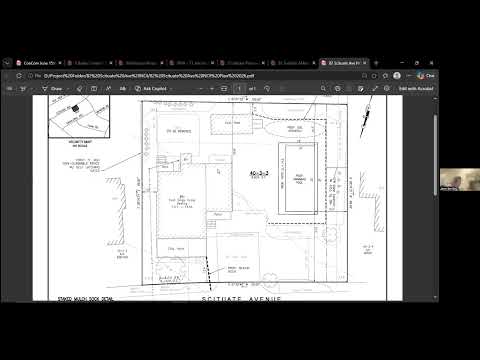
Staff reported unpermitted patio work and other changes at 42 Crescent that exceed earlier approvals. Commission members said the patio must be removed because it was not authorized and noted prior instances of noncompliance. Penny and other commissioners repeatedly urged full removal of the unapproved patio and the pad near the house that holds air-conditioning condensers and a generator.
Agen Todd, the builder on the project, said the disturbed areas were generally within previously permitted disturbance boundaries and that the primary mistake was substituting permeable pavers for approved grass without securing commission permission. Todd offered additional mitigation: invasive-species removal in lower areas (roughly 1,000 sq. ft. proposed), an expanded planting strip along the back of the property and long-term maintenance commitments. He said an arborist is working to preserve one marginal tree and proposed drainage details for the equipment pad.
Commissioners insisted they wanted the site built "as approved" and not altered after the fact. They asked staff to draft a clear enforcement letter that sets required remediation (remove unapproved patio and unauthorized pad) with concrete dates and spelled-out penalties for failure to comply. The builder said he is willing to meet commissioners on-site and provide additional documentation; the commission asked staff to circulate a draft enforcement letter to members before sending it to the applicant.
The commission did not vote to waive removal. It instructed staff to prepare formal correspondence detailing required removal, mitigation expectations, and enforcement consequences, and to follow up with a site visit and more detailed plans from the applicant.