Get Full Government Meeting Transcripts, Videos, & Alerts Forever!
Get email alerts on the Land Use Definitions topic
No spam. Unsubscribe anytime.
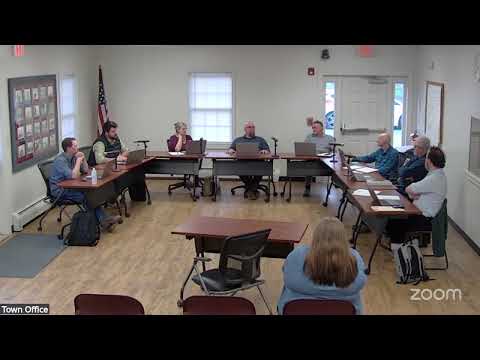
Newcastle planning board presses for clearer land‑use definitions after ambiguous application
Summary
Board members raised concerns that the CEO's initial classification of ambiguous applications can shift decision‑making away from the planning board and urged a review of use definitions (for example, distinguishing 'small engine repair' from general 'vehicular repair') to reduce inconsistent interpretation and appeals.
A discussion of administrative process and land‑use definitions dominated the latter portion of the Newcastle Planning Board meeting on May 15, after members reviewed a recently filed ambiguous application (referred to in the meeting as the 'Bernie' application).
A member of the board said the town CEO currently receives applications and often makes the initial determination of an activity’s use, which then determines whether a planning board review is required. That practice, the member said, can shift decision‑making away from the board and create “finger‑pointing” when the planning board later disagrees with the CEO’s classification.
The board discussed whether the CEO or the planning board should decide use classifications and agreed that clarifying and tightening the town’s definitions of permitted and conditional uses across districts would reduce ambiguity. Members suggested creating stratified categories to match impact levels — for example, a distinct “small engine repair” use that would be treated differently from general “vehicular repair.”
Staff and members also discussed process refinements: using more precise definitions and guidance in the zoning ordinance, increasing administrative guidance for applicants and staff, and establishing a clear check‑back mechanism if the planning board believes an application was misclassified. The board proposed adding a review of use definitions and bylaws to their July agenda and invited the CEO for a future meeting to clarify roles and expectations.
Board governance and scheduling items were discussed in the same meeting: staff reviewed staggered member terms and recommended that the board adopt the next municipal year’s schedule in July after select board reappointments, and members debated whether to reschedule the June meeting because several would be at a professional conference.
The board adjourned at 7:11 p.m. without taking any formal action on changing ordinance language; members set priorities for bylaw review and clearer use definitions as next steps.