Get Full Government Meeting Transcripts, Videos, & Alerts Forever!
Get email alerts on the Registered Agents topic
No spam. Unsubscribe anytime.
Wyoming committee tables bill that would require registered agents to hold ownership records after broad industry pushback
Summary
The House Corporations Committee heard hours of testimony on Senate File 82, which would expand recordkeeping and inspection powers for registered agents; lawmakers voted to table the measure for interim study after witnesses warned it could create enforcement, privacy and competitiveness problems.
The House Corporations Committee on Tuesday heard extended public testimony on Senate File 82, a proposal to expand duties for registered agents and give the Secretary of State broader inspection powers — but ultimately tabled the bill for further study.
Proponents, including the Secretary of State, said the change is intended to give the state a tool to identify and investigate potentially fraudulent use of Wyoming entities. "We've really taken on fraud in the Secretary of State's office, but we're limited in what we can do," the Secretary of State told the committee, arguing the proposal would help close gaps in enforcement.
Opponents — a string of attorneys, registered-agent firms and trade groups — said the bill as drafted would not stop the kinds of identity-theft and tax fraud described in testimony and would saddle third-party registered agents with sensitive records, increasing litigation and relocation risk. David Kerr, CEO of Cowry, said the proposed change would make registered agents the epicenter of requests for ownership information and expose private citizens to legal pressure. "The bill as drafted doesn't do anything," Kerr said, arguing enforcement provisions were weak and the measure would place agents in an untenable position.
Other witnesses offered technical and market warnings. Tom Long, a Cheyenne attorney, said the statute would require disclosure of membership information that clients sometimes withhold even from counsel and predicted LLCs could redomesticate to jurisdictions such as Delaware or Nevada if the law passes. Graham Norris, general counsel for a large registered-agent company, urged the committee to consider federal alternatives such as the Corporate Transparency Act and FinCEN's beneficial-ownership resources rather than creating new state-level obligations that may not yield the intended results.
Trade groups and registered-agent industry voices also urged delay. Pia Angelus of the National Public Records Research Association said the bill would likely reduce new filings and prompt existing Wyoming businesses to move, and asked the committee to form a working group to study the issue. Titus Gore, president of the Wyoming Trust Association, said the association "neither supports nor opposes" the bill but recommended referral to the interim for further study to protect trust-related arrangements and ensure appropriate exemptions for regulated entities.
Witnesses and small registered agents proposed narrower fixes. David Pope, a CPA and small registered-agent operator, outlined several conceptual amendments: reduced data-point requirements, safe harbors for agents acting in good faith, confidentiality duties, clarified rulemaking authority for the Secretary of State, and investment in enforcement analytics and staffing.
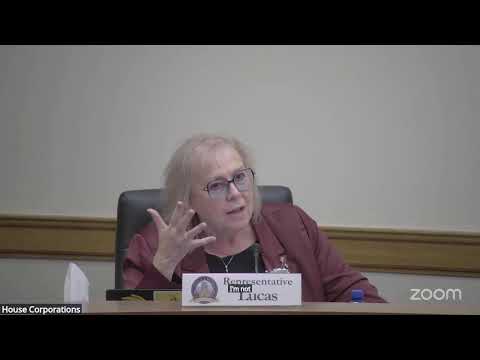
After brief member discussion about the bill's scope and the work needed to get it right, Representative Lucas moved to table SF82 to the interim. Following a voice vote, the motion to table was approved and the committee set the measure aside for additional study and potential amendment during the interim.
What happens next: With the committee tabling SF82 for the interim, sponsors, industry groups and the Secretary of State are likely to negotiate technical changes and potential exemptions before legislators consider the issue again. The committee asked stakeholders to submit proposed amendments to the committee staff for consideration.
Notes: Witnesses supplied jurisdictional and quantitative claims during testimony: Kerr said his practice helped bring "more than $3 billion" into U.S. reporting schemes and paid "more than $20 million" in federal taxes for clients; he cited an IRS estimate that roughly $11.4 billion is lost every five years to related fraud (figure given in testimony and reported here as described by the witness). The committee did not adopt any substantive amendments before tabling the bill.