Get Full Government Meeting Transcripts, Videos, & Alerts Forever!
Get email alerts on the Property Tax Exemption topic
No spam. Unsubscribe anytime.
Wyoming Senate committee advances bill to exempt certain Game and Fish properties from property tax
Summary
A Wyoming Senate committee voted 5-0 to advance Senate File 26, which would exempt select Wyoming Game and Fish buildings from property tax and is estimated to cut the department's property tax burden by about half of the roughly $850,000 paid in 2025; county assessors retain discretion over employee housing and some residences.
A Wyoming Senate committee voted to advance Senate File 26, which would exempt certain Wyoming Game and Fish properties from property tax and reduce the agency's current property tax payments, the agency told legislators.
Angie Bruce, director of Wyoming Game and Fish, told the committee the bill would exempt regional offices, the department's Cheyenne headquarters and the Big Horn Sheep Center in Dubo from property tax and "puts us really in line with other state agencies." Bruce said the department paid about $850,000 in property taxes in 2025 and that the measure would cut those expenditures by roughly half.
The bill does not remove all tax liability on department-owned housing. Bruce and agency staff said the text explicitly calls out employee housing (page two, line 13) and that it would be the county assessor who determines whether particular residences or portions of residences are taxable. Chief of Services Division Sean Bippy and Commissioner Rusty Bell told the committee that wildlife habitat management areas used for hunter access (WHMAs) are expected to continue to be taxed at agricultural value and that the department intends to continue paying taxes on those lands to preserve working relationships with counties and private landowners.
Ken Gil, Property Tax Division administrator at the Department of Revenue, told senators the state's exemption statutes are complicated and observed that, as written, employee housing furnished to staff would be taxable under current statute interpretation. Gil said the main public facilities cited by the agency would likely be non-taxable but that the Department of Revenue might need to promulgate or clarify rules for assessors to administer the change.
Converse County Assessor Dixie Huxville explained assessors generally do not prorate taxes between residential and commercial portions of a single dwelling and that primary use as of Jan. 1 typically determines classification. She said many game warden residences in her county are taxed as residential even if a small office function exists.
Conservation and wildlife groups voiced support for the proposal at the hearing. Jess Johnson of the Wyoming Wildlife Federation called the bill "one of the highest priority bills on our list," saying it helps keep the department's budget stable without immediate increases in license fees. Richard Garrett of the Greater Yellowstone Coalition emphasized that property taxes for the department are paid through license fees and that the exemption could help avoid future fee increases for hunters and anglers.
Jeremiah Reman of the County Commissioners Association told the committee counties would engage if the bill were later amended to broaden exemptions for residences, but he said he was not likely to be strongly opposed as the measure stands.
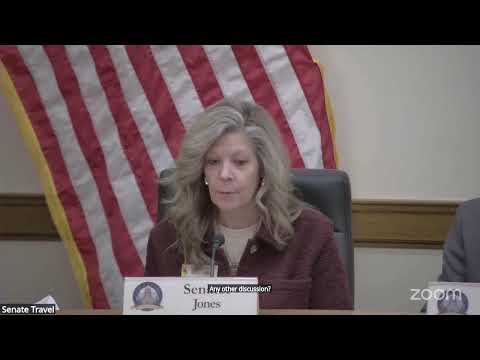
A committee member moved to advance Senate File 26 and the roll-call vote recorded affirmative responses from Senators Boner, Hicks, Jones, Scheler and Chairman Landon; the committee passed the bill to the full Senate for further consideration.
The bill now moves to the Senate chamber for additional debate and any further amendments.