Get Full Government Meeting Transcripts, Videos, & Alerts Forever!
Get email alerts on the Oil And Gas Bonding Pool topic
No spam. Unsubscribe anytime.
Minerals committee advances bill to keep oil-and-gas bonding‑pool earnings in the pool
Summary
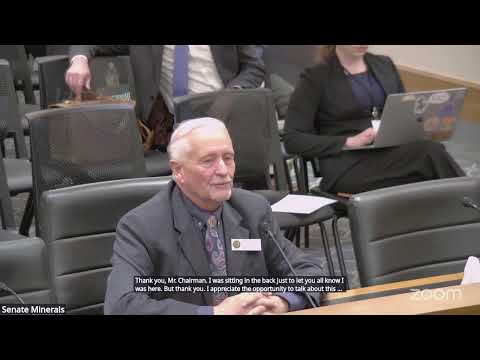
The Minerals Committee voted unanimously to advance House Bill Five, which would direct investment earnings from the state oil‑and‑gas bonding pool to remain with the pool rather than revert to the general fund; committee members heard that a third‑party administrator is being contracted to issue bonds to small operators.
The Minerals Committee voted 5‑0 to advance House Bill Five, which would amend state law so investment earnings from the oil‑and‑gas bonding pool remain in the pool rather than reverting to the general fund. Tom Cropach, oil and gas supervisor at the Oil and Gas Commission, told the committee the change corrects a statutory gap and aligns with the pool's original intent to grow through retained earnings.
"The intent of the bonding pool bill was to help the pool grow by keeping the earnings, the investment earnings in the pool," Cropach said, explaining that without the new language those earnings would otherwise return to the general fund.
The bill discussion focused largely on implementation: the commission completed rulemaking, issued an RFP and selected a private third‑party bonding administrator, Cropach said. The commission is negotiating a contract and expects to be able to issue bonds from the pool "probably in the next 30 to 45 days" once negotiations conclude.
Committee members pressed for details relevant to small operators. Cropach said the commission will publish a short application and that the process will start with the commission and include an evaluation by the third‑party administrator; the commission will make the final determination on participants. He said the goal is to reduce fees and collateral requirements using state pool funds compared with what many operators must currently post.
Cropach and committee members described the fee and collateral landscape in broad terms: the original proposal discussed a fee in the 3 percent range and collateral around 50 percent for some arrangements, while many operators currently must post 100 percent collateral and pay annual fees in the 3–5 percent range. Cropach said the state funds in the bonding pool should lower those costs for participants.
Members also discussed the federal Bureau of Land Management (BLM) bonding rule, which committee witnesses said has prompted interest in the pool. Witnesses said BLM temporarily paused implementation for existing operators and has not published final draft rule language; however, the interim or announced federal requirements already affect new operators and transfers. Committee members and witnesses cited examples of federal increases that raised concerns (witnesses discussed figures ranging from about $25,000 previously to as much as $500,000 in some statewide bond scenarios and per‑lease figures cited at $100,000–$150,000).
A representative identified in the hearing as speaking for the governor's office said the governor's staff contacts BLM frequently and is urging timely updates and consideration of a longer pause where appropriate. Support from industry and local stakeholders was also voiced during public comment.
After discussion, a motion to advance House Bill Five was made and seconded by Senator Jones. The committee conducted a roll‑call vote recorded by staff member Sue; Senator Cooper, Senator Jones, Senator Nethercott, Senator Rothus and Chairman Anderson each voted yes. The committee voted to advance the bill to the floor.
The committee adjourned with no further action scheduled on the item at that meeting. The bill will move next to the floor; Senator Cooper volunteered to carry it there.