Get Full Government Meeting Transcripts, Videos, & Alerts Forever!
Get email alerts on the Registered Agents topic
No spam. Unsubscribe anytime.
Debate over requiring registered agents to collect owners’ details splits advocates and industry; committee leaves record open
Summary
Senate File 82 would require commercial registered agents to collect owners’ names and addresses to aid fraud investigations. Supporters, including the Secretary of State, said it gives enforcement tools; registered agents, accountants and attorneys warned of privacy, verification and operational problems and urged an interim study. The committee left public testimony open.
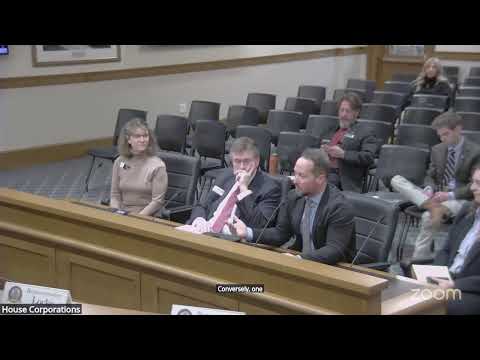
Senate File 82, a proposal to require commercial registered agents to keep beneficial‑ownership information for the entities they represent, drew a lengthy public record and divided testimony at the Joint Corporations Committee.
Senator Barry KGO introduced the bill as a ‘‘know‑your‑customer’’ measure aimed at curbing fraud tied to corporate filings, saying Sheridan County and others have seen investigations tied to misuse of filings. "Who owns the company that you're representing as the registered agent?" he asked, summarizing the bill’s goal to provide more information to law enforcement when filings are abused.
The bill would add an ownership‑reporting requirement for commercial registered agents but carves out exemptions for entities with more than 100 owners, certain resident companies with a fixed principal place of business in Wyoming, and some fund structures. Senator KGO and supporters said the change would allow audits and give the Secretary of State and law enforcement more actionable information.
Secretary of State Chuck Gray said his office supports the legislation as a tool to combat business fraud. Gray described administrative steps his office has taken — dissolutions based on affidavits of fraud, audits of registered agents, and a business‑fraud working group — and said the proposed reporting would allow audits and sharing of data with investigators. "Requiring beneficial ownership information to be kept on file with a CRA would open up the door for our office and any law enforcement agency involved in a criminal investigation to obtain that information," he told the committee.
Industry witnesses pushed back. Dallas Lane, who operates a small registered‑agent business, said registered agents' statutory role is ‘‘to receive service of process’’ and that many RAs lack authority or capacity to verify owners; he urged the committee to send the matter to an interim study. CPA David Pope said the bill would do little to stop determined fraudsters who will lie to an agent, and warned that privacy risks and possible migration of legitimate filers to other states could cost Wyoming revenue.
Attorneys raised legal and market concerns. Matt Kaufman said registered agents do not have corporate authority to verify ownership and predicted some agents would resign en masse if required to collect and verify beneficial‑ownership details quickly; that could create operational disruption and a backlog for the Secretary of State.
Committee members expressed shared concern about implementation timing and the privacy/business tradeoffs. Several asked for more technical detail, and the chair said public comment would remain open and continue at the committee’s next meeting to permit additional testimony and possible interim work. The committee did not take a final vote on SF82.
Proponents said the bill is an incremental, enforceable step to give the state more leverage against actors abusing corporate filings. Opponents urged more study and recommended targeted alternatives (for example, requiring the organizer on filings to certify they have gathered certain information) and statutory protections for confidentiality of any collected data.
The committee left the public record open and plans to continue testimony at its next meeting, and members signaled the issue may become an interim study topic.