Get Full Government Meeting Transcripts, Videos, & Alerts Forever!
Get email alerts on the Guardianship topic
No spam. Unsubscribe anytime.
Committee tables guardianship protections after extensive testimony; sponsors seek interim study
Summary
House Bill 101, intended to restore statutory safeguards for wards and set reporting and fee limits for guardians, drew lengthy testimony from state agencies, providers and affected families. Committee members voted to table the bill for interim study to refine oversight, fee and complaint processes.
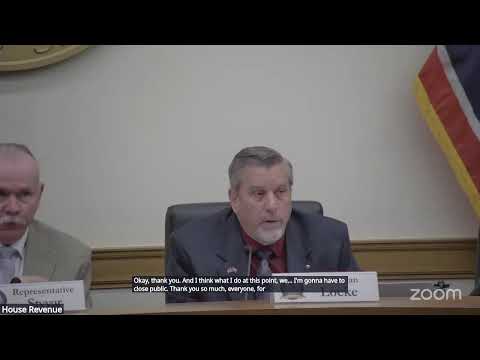
House Bill 101, a sponsor-drafted package of changes to guardianship law, drew broad and often emotional testimony at the House Revenue Committee on Feb. 19 and was tabled for interim work.
Vice Chair Styiver, the bill’s sponsor, said the measure aims to "put some of the protections back in" that were lost after the Office of the State Public Guardian was sunset decades ago. The bill draft included requirements for verified, periodic contact between guardians and wards, limits on fees so a ward’s estate is not unnecessarily diminished, and a requirement that guardians notify agencies that are payees for benefits such as Social Security.
Christy Gordy, senior administrator for the Department of Family Services’ Social Services Division, told the committee that DFS uses contracted guardianship services for vulnerable adults and that its average monthly payments are higher than a $55 figure previously proposed by the sponsor — DFS reported averages near $375 for minor guardianships and over $600 for vulnerable adult guardianships. Gordy said DFS supports the amended language that clarifies contact and payee notification.
Legal and provider witnesses described the statutory landscape. Beth Lance of the Wyoming Trial Lawyers Association explained the distinction between guardianship (care decisions) and conservatorship (financial decisions) and noted courts currently review six-month reports; Emily Smith, CEO of Wyoming Guardianship Corporation, described corporate guardian operations and earlier state contracting for guardianship services.
Public comment included providers and family members who raised concerns about high hourly fees, guardian turnover, failure of some guardians to respond to providers’ calls, lack of timely financial statements for wards, and, in at least one case, alleged financial exploitation of a vulnerable adult. Providers said they sometimes must wait until six-month reporting to learn who a guardian is or to receive required documentation.
Several family members shared detailed accounts of disputes with professional guardians and conservators, including claims that guardians acted without adequately consulting the ward, imposed expensive and intrusive services, or limited family members’ access. One provider and advocates urged more robust complaint processes and independent review for exploitation allegations.
Committee response: Given the volume and seriousness of testimony, Representative Lean moved to table the bill for interim study; the motion carried. Chairman Lockach and members committed to pursue further work in interim committees (including judiciary and health/labor) and to gather more stakeholder input before the Legislature acts further.
What comes next: HB101 will be tabled and referred for interim study so lawmakers can reconcile competing priorities — stronger oversight and complaint mechanisms for wards while preserving reliable guardianship services and avoiding unintended barriers for families and providers.