Get Full Government Meeting Transcripts, Videos, & Alerts Forever!
Get email alerts on the Elections Voting Machines topic
No spam. Unsubscribe anytime.
Committee approves tighter rules for voting‑machine testing, adopts notice and attendance changes
Summary
The Joint Corporations Committee advanced Senate File 28 to clarify public notice, retests, and individual machine testing after the Secretary of State described problems with 2024 tests. Members adopted amendments changing some notice periods and removing numeric limits on observers before passing the measure in committee.
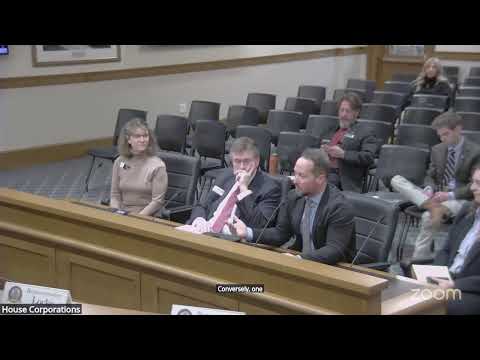
The Joint Corporations Committee voted to advance Senate File 28, a bill aimed at clarifying how Wyoming counties test voting machines before elections.
Secretary of State Chuck Ray testified in full support of the bill, saying it responds to problems identified during the 2024 election cycle when some counties’ logic‑and‑accuracy tests did not assign different vote totals to each candidate as required by statute. “We want to ramp up clarity and then we also want to ramp up rigor,” Ray said, describing changes to notice, public observation, retesting, and treatment of write‑in votes under 22‑11‑104.
Ray told the committee the bill would require every machine to be individually tested — including electronic ballot marking devices — and would clarify that retests are permissible and that seals may be broken for that purpose. He said the Secretary of State’s office consulted the attorney general about retesting and had asked counties to retest irregular tests; 18 of 20 counties he mentioned had agreed to retest after his office raised concerns.
County clerks’ representatives said they supported the bill’s goals but cautioned about operational realities. Mary Langford, representing the county clerks, said clerks balked at extending required public‑notice timelines from two to four or five days because ballot printing and other timelines sometimes make longer notice impractical. “We request the following amendments to stay at two as opposed to four,” Langford said.
The League of Women Voters urged allowing clerks discretion to limit attendance to what the testing location can accommodate; Margarite Herman said permitting clerks to manage attendance helps keep tests orderly and preserves public confidence in the process. Fremont County Clerk Julie Freeze, appearing online, said two days is more realistic in many counties though clerks will try to provide more notice when possible.
Committee members considered several amendments. They rejected a proposal to restore a five‑day challenge window, adopted amendments that in two places changed notice from two days to four days, and removed Senate language that set a minimum of three public representatives and a numeric cap. Representative Weber moved the bill; Representative Brown seconded. The committee took a roll‑call vote and the motion carried with nine affirmative votes.
Proponents say SF28 clarifies ambiguities exposed in the prior election cycle and ensures public access and consistent procedures for testing so equipment will be sealed only after compliant testing. Opponents or cautious commenters focused on implementation timing and the practical limits faced by county clerks.
The committee recorded changes that (a) require posting of test results to county websites and (b) make clear write‑in votes must be treated as other candidates for purposes of assigning different vote totals during tests. The committee also approved an amendment explicitly requiring machines be resealed immediately after any retest.
The committee moved on after passage to the next bill on its agenda.