Get Full Government Meeting Transcripts, Videos, & Alerts Forever!
Get email alerts on the Eminent Domain topic
No spam. Unsubscribe anytime.
Committee advances bill requiring legislative sign-off before eminent domain on state-funded water projects
Summary
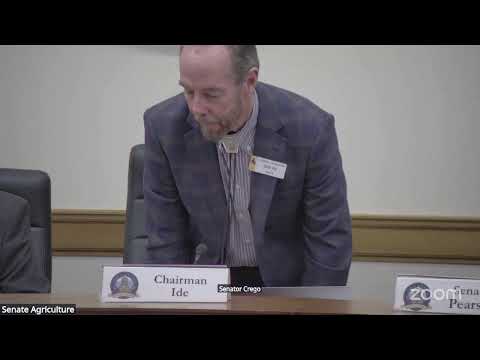
A Wyoming legislative committee advanced Senate File 118, which would require legislative (or commission-plus-legislature) approval before entities may exercise eminent domain on projects that receive state water-development funds. Proponents called it a safeguard for private property; municipal leaders warned it could politicize and delay urgent projects.
A legislative committee voted to advance Senate File 118 after a day of testimony and debate over whether the Legislature should have to authorize eminent domain when state dollars fund water projects.
Senator Hicks, the bill sponsor, told the committee the bill does not eliminate eminent domain but would require that where the Legislature appropriates state funds for a water project, the Legislature explicitly permit use of condemnation if a recommendation from the Water Development Commission supports it. "When we're putting 95% of the cost of a project out there, it seems like the legislature ought to shepherd our money and make sure that it meets the full intent of what the legislature wanted," Hicks said, arguing the change is a safeguard for private-property rights.
Supporters at the hearing said the measure is narrowly targeted to projects that use state water-development funds and that the bill exempts projects funded before July 1. Brett Molen of the Wyoming Farm Bureau Federation said the change would give landowners added protection while preserving water development. "It doesn't eliminate eminent domain. It just puts another safeguard in there that you'll have to come back and get permission from the legislature to be able to use it," Molen said.
Opponents, led by Ashley Harpstreet, executive director of the Wyoming Association of Municipalities, warned the requirement would politicize a technical, engineering-driven process and could delay critical repairs or emergency projects that cannot wait for the Legislature to convene. "Legislative pre-approval can only occur during session. Communities facing water shortages, contamination, infrastructure failure, or urgent replacement needs cannot wait for months for the legislature to convene," Harpstreet said.
Local officials and utilities described real-world trade-offs. Matt Murdoch, mayor of Pinedale, urged targeted landowner protections instead of a hard stop, suggesting requirements such as a landowner-rights brochure, certified appraisal and a defined good-faith negotiation period. Brad Brooks of the City of Cheyenne Board of Public Utilities said his utility has avoided using eminent domain in nearly 30 years and cautioned that delays can multiply costs and complicate financing.
Jason Me, director of the Wyoming Water Development Office, said historical research turned up several projects in which eminent domain was discussed during negotiations but no clear evidence eminent-domain proceedings went all the way to court. He and other panelists described the multistage planning process (level one reconnaissance, level two alternatives, level three preliminary engineering) and said easement issues are typically identified before 50 percent design.
Senator Hicks said the bill remains a policy choice for the Legislature and suggested compromise approaches — for example, authorizing the commission to proceed in urgent cases with reporting back to the Legislature — to avoid unnecessary delay while protecting landowners.
The committee moved and seconded the bill and recorded a roll-call vote of four "aye" and one excused member; the measure advanced out of committee to the next legislative stage.
The committee directed staff and sponsors to consider amendments to preserve timely responses for emergencies (for example, interim committee review or emergency carve-outs) and to clarify grandfathering language for projects already funded or beyond certain design milestones. The bill's next steps are committee-of-the-whole or general-file consideration where members may offer amendments or define statutory triggers for legislative review.