Get Full Government Meeting Transcripts, Videos, & Alerts Forever!
Get email alerts on the Subdivision Replat topic
No spam. Unsubscribe anytime.
Natrona planners table Allenale replat after neighbors cite drainage, private road, and crime concerns
Summary
The Natrona County Planning & Zoning Commission on May 12 tabled MS26-01, a proposal by Mark and Missy Van Horn to vacate and replat 46 Allenale lots into four parcels, after residents testified that past grading altered drainage, roads were never dedicated to the county, and a proposed commercial storage use would harm neighborhood character. The commission set the item for June 9, 2026 to allow staff research and possible conditions.
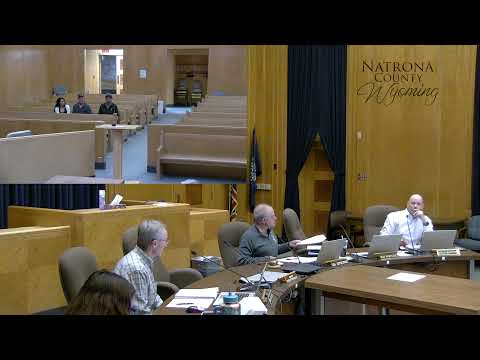
The Natrona County Planning and Zoning Commission on May 12 voted unanimously to table MS26-01, a major-subdivision vacation and replat application for the Allenale Addition, to its June 9, 2026 meeting after extended public testimony raised concerns about drainage, rights-of-way and potential commercial uses.
Planning staff presented the application, saying applicants Mark and Missy Van Horn seek to consolidate 46 small platted lots into four larger parcels totaling about 10.65 acres, with two parcels intended for future residential use and two allowed for commercial use under the current Suburban Residential zoning. Staff noted city water and sewer connections were proposed and that several county agencies had reviewed the preliminary plat; staff declined to make a recommendation in the packet because multiple written comments arrived after the staff report was prepared.
Neighbors provided the bulk of the public record at the hearing. Kyle Sowell and Elden Young described recurring standing water and what they said was altered drainage caused when earth-moving began on or adjacent to the subject parcels; Young said about 75% of the replat sits on a natural drainage draw and warned regrading or building to county road standards could send water onto surrounding private property. Robert Grant and others raised public-safety and nuisance concerns about a potentially permitted commercial storage use, citing national trends in theft and criminal activity near some storage facilities; Grant specifically mentioned that law enforcement has found methamphetamine labs in storage units in other jurisdictions.
Multiple residents, including Connie McCoy and Bernie Stutter, asked whether streets shown on the 1921 plat had ever been legally dedicated to the county. County attorney Ashley Smith explained the 1921 Allenale plat was recorded but contains no language dedicating the platted roads to public use; therefore the roads remain technically private unless owners later formally dedicated them. Staff said private roads can be used for access but that utilities or the city would need easements from owners to place water or sewer in those rights-of-way.
Applicant Mark Van Horn said the replat is intended to reduce density and allow more practical home placement; he disputed claims that the applicants had substantially altered drainage and said they had surveyed the lines and notified neighbors. He also told the commission that any commercial operation would include secured gates and cameras.
Contract engineer Bill Faringer, who performed boundary surveying for the applicants, told the commission the local soils are clay and that any future development or roads would be required to meet county road and site-plan standards, including drainage controls and downcast lighting, and that drainage issues would be addressed during final-site review.
Commissioners said unresolved records questions about prior replats, the lack of explicit road dedications across Allenale and lingering drainage and access concerns warranted additional staff research. One commissioner moved to table MS26-01; the motion, set for the June 9, 2026 meeting, passed unanimously.
The commission did not take a final position on whether commercial storage would be allowed; staff noted the applicant filed the replat process before recent zoning changes, which affects whether a conditional-use review would be required. The next procedural step is a return to the Planning & Zoning Commission on June 9 with staff findings and any recommended conditions or additional records research.