Get Full Government Meeting Transcripts, Videos, & Alerts Forever!
Get email alerts on the Workload topic
No spam. Unsubscribe anytime.
Council hears staff‑capacity briefing; advisory bodies ask for scheduling changes to protect participation
Summary
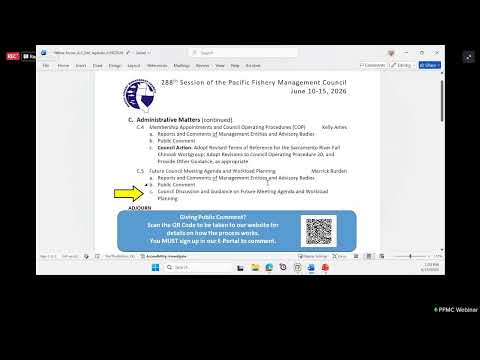
Executive Director Merrick Burton reported staff are forecasting average workload above 100% FTE for July–December and above 120% during meeting months. GMT and GAP asked for additional pre‑meeting time or remote participation in September and extra meeting time in November; council directed staff to explore options and return in September.
Council staff presented a staffing and workload forecast showing council staff would average about 107% of full‑time capacity July–December and often exceed 120% during council meeting months.
Executive Director Merrick Burton said the forecasts are used to balance assignments and warned that actions taken at the June meeting (particularly on stock assessment process improvements) would absorb available capacity. "Council staff time is fully taken based on our most recent workload forecast effort," Burton reported, noting that groundfish work consumes substantially more staff time than other fisheries.
Groundfish advisory bodies raised concerns about compressed agendas and the impact on public engagement. Whitney Roberts (GMT) asked the council to consider allowing the GMT to convene two days before June even‑year meetings and to permit remote participation in September even years for parts of the meeting, noting the team may need extra time to finalize harvest‑specification reports. Sarah Naani (GAP) urged that in‑person participation in September be maintained where possible because in‑person joint meetings allow side conversations and relationship building that improve written advice.
Council members and staff discussed options including limited extra meeting days, remote pre‑meeting sessions to frontload report writing, and scheduling adjustments for November — several councilors asked staff to return with scheduling options in September. The council did not take a formal vote on schedule changes but directed staff to explore alternatives to reduce advisory‑body workload and preserve public engagement.
What this means: Staff are operating near or above capacity in meeting months and council work on groundfish is the primary driver of workload. Advisory bodies seek more time or different meeting formats for high‑intensity groundfish periods; the council asked staff to develop options for handling the load and to return with recommendations in September.
Next steps: Council staff will examine scheduling options (including feasibility of additional pre‑meeting days, more remote work sessions, and potential earlier GMT start times in November), confirm contractual/logistical constraints (hotel, travel), and report back at the September meeting with implementation proposals.