Get Full Government Meeting Transcripts, Videos, & Alerts Forever!
Get email alerts on the Public Safety Fee topic
No spam. Unsubscribe anytime.
Monmouth resource center urges more flexibility for public-safety fee as most collected dollars sit unused
Summary
Monmouth Community Resource Center staff told the city council that the $10.55 monthly public-safety fee is not functioning as intended: outreach staff said few residents request the small reimbursement, the county cannot economically cut many tiny checks, and roughly $17,000 collected has yielded under $500 in direct assistance, prompting a recommendation to repurpose or permit broader use of the funds.
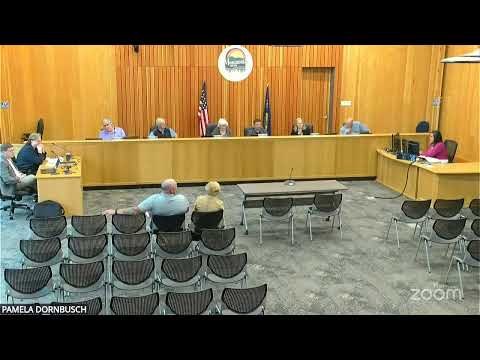
At the Monmouth City Council meeting on April 21, 2026, Nicole Walker Suni, a resource center coordinator at the Monmouth Community Resource Center, told councilors the center has received no requests specifically for the $10.55 monthly public-safety fee reimbursement since that funding stream began being collected.
"No one has come in our door specifically asking to be reimbursed for $10.55," Walker Suni said, adding that the center’s fiscal office will not issue the small checks because processing costs outweigh the benefit.
Stephanie Gilbert, program manager for the Pulk County Family and Community Outreach Department, said the county estimates that through June the fee will have generated about $17,000 while the center has spent less than $500 on direct reimbursements tied to that line item.
"Collecting those dollars and handing them back or the vast majority of it back isn't good fiscal practice for us," Gilbert said, and noted the center may have to discontinue accepting the fee in its current form beginning July 1 unless the city allows more flexible use.
Councilors pressed staff on options and operational constraints. Councilor Lopez asked whether the fee could instead be used to cover parts of larger utility or emergency-assistance payments, and staff said they routinely braid city dollars with other funds to maximize impact but are limited by the statute and by their fiscal controls.
Walker Suni described how the center sets a general cap—about $300 per assistance case—and estimated the average assistance request runs around $200, though she offered to provide exact figures to the council.
Councilor Kerry and others noted the program was created with good intentions but that its one-time-per-12-month rule and the administrative cost of issuing many small reimbursements make the current structure ineffective. Several councilors said they expected a fuller discussion in an upcoming work session and during the budget process.
The council did not take formal action at the meeting; staff were thanked for the presentation and the council moved the topic to future budget and policy discussions.