Get Full Government Meeting Transcripts, Videos, & Alerts Forever!
Get email alerts on the Land Use Procedure topic
No spam. Unsubscribe anytime.
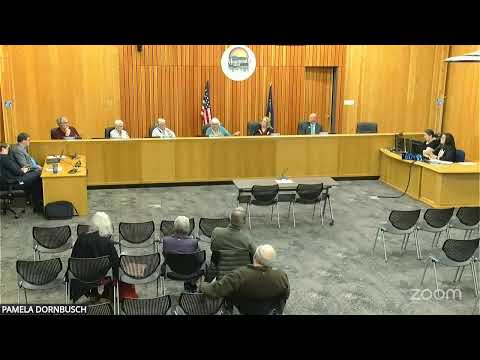
Monmouth council receives land‑use procedural training ahead of UGB discussion
Summary
At a March 3 work session, city attorney Justin Thorp and staffer Suzanne Duffner briefed the Monmouth City Council on the legal and procedural differences between quasi‑judicial and legislative land‑use decisions, stressing disclosure rules, findings requirements and why the distinction matters for a pending comprehensive‑plan/UGB matter. The council rescheduled the next hearing to April 7.
City attorney Justin Thorp and city planning staff led a March 3 work session for the Monmouth City Council to clarify when land‑use decisions are treated as quasi‑judicial (court‑like) versus legislative (policy) and what that means for notice, disclosure and appeals.
Thorp told the council that the two roles carry different expectations: "As a city council, you kind of are wearing two different hats depending on what you're doing," he said, explaining that quasi‑judicial matters require stricter procedures because they apply legal criteria to specific parties and are more vulnerable to being overturned if process lapses. He advised councilors that ex parte contacts must be disclosed in quasi‑judicial hearings and that bias or prejudgment can be grounds for recusal.
The guidance was framed around an upcoming comprehensive‑plan amendment and a proposed urban growth boundary (UGB) land swap the council has been considering. Suzanne Duffner gave an overview of Oregon’s land‑use framework, citing Senate Bill 100 and the state’s 19 goals, and described a comprehensive plan as "a city's 20‑year plan" that is implemented by local zoning and subject to state acknowledgement by the Department of Land Conservation and Development.
Duffner summarized how different decision types are handled locally — from administrative (staff) reviews to Type 4 legislative map amendments — and said changes to an acknowledged plan require a multi‑step process that typically includes a planning‑commission recommendation followed by a council hearing and an ordinance adoption.
Council members pressed staff on practical points: whether online neighborhood discussions or staff briefings count as ex parte contacts, whether staff communications create bias, and how UGB and county zoning interact for areas outside city limits. Thorp said conversations with staff are generally not disqualifying and are subject to public records rules, but councilors should disclose influential contacts and consider recusal if they have prejudged a specific quasi‑judicial matter.
On whether the pending amendment is legislative or quasi‑judicial, Thorp and staff said the proposal appears to be legislative — a policy decision with broad discretion — though the council noted the process used to date resembled quasi‑judicial procedures and that following robust procedures reduces legal risk.
Mayor Coons announced the next hearing on the legislative amendment has been rescheduled from March 17 to April 7 to accommodate staff and attorneys and to allow the council to circulate an expanded packet that includes additional written testimony the city has received.
The training aims to reduce procedural errors on high‑stakes land‑use items, ensure the council follows required disclosure and findings practices, and make the record defensible if a decision is appealed.