Get Full Government Meeting Transcripts, Videos, & Alerts Forever!
Get email alerts on the Library Funding topic
No spam. Unsubscribe anytime.
West Bath debate centers on $44,517 library appropriation and an option for individual library‑choice reimbursements
Summary
At a town hearing, residents debated whether to approve a $44,517 appropriation to fully fund the local library or instead reimburse residents up to $85 for individual library cards. Supporters warned cuts would threaten school services and programs; opponents said reimbursements or reciprocal borrowing could save roughly $8,300.
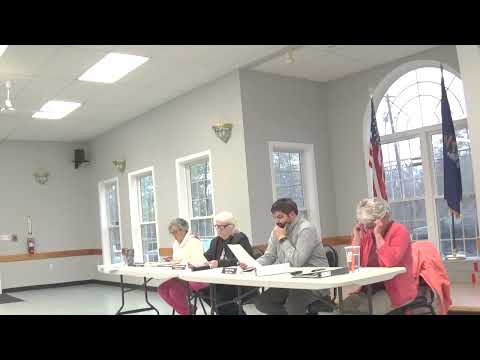
A lively portion of West Bath’s town meeting centered on Article 28 and an accompanying Article 29 that offered two ways to fund library services for residents.
The select board presented Article 28, a $44,517 request to fund the Benton/Patron‑free library’s services to the town. Article 29 offered two options: Option A would fund the library in full; Option B would let residents obtain cards at a library of their choice and be reimbursed by the town up to $85 per resident card, limited by the total appropriation approved under Article 28.
Julie (town administrator) answered repeated requests for figures and said the administration could administer reimbursements on regular warrants if Option B were chosen. She cautioned that a warrant is a public record and that reimbursements would appear in municipal payment records.
Don Lee, identifying himself as a library trustee, urged support for full funding and offered to circulate information about services that would be lost if the town withdrew. “I’m Don Lee. I’m also trustee representing West to Capture Library,” he said during his remarks.
Several residents pressed for fiscal scrutiny. One budget committee member calculated that reimbursing the 426 active West Bath cardholders at the proposed per‑card rate would reduce the town’s expense by about $8,300 compared with the bulk appropriation, and asked whether that saving should be used to lower the mill rate. Opponents of cuts stressed that the library’s services — interlibrary loans, homebound delivery, school partnerships and community programming — extend beyond cardholders and said those services would be at risk if funding were reduced.
Speakers also discussed the library’s endowment. Participants cited figures the library provided (values discussed in debate ranged around $8.4 million) and said the library uses endowment distributions (trustees described a 5% draw policy) to support operations; critics said a large endowment did not by itself eliminate the town’s need to negotiate municipal contributions. Trustees said some services and partnerships require predictable, year‑to‑year municipal funding.
There was also debate over whether participation in a larger reciprocal borrowing consortium could reduce perceived needs for local funding. Town staff and trustees explained that the local library is not currently part of the 67‑library reciprocal program discussed in the room and that joining such a network would require operational and financial changes and multi‑municipal guarantees.
Residents raised privacy and administrative concerns about Option B: because reimbursements would be processed on warrant payments, the names of reimbursed cardholders would likely appear in public payment records. Town staff said they could administer reimbursements but acknowledged the public‑record consequence.
Multiple speakers urged that the matter be decided at town meeting; the moderator noted a written ballot had been requested for the library articles and that certain amendments at the town meeting could require a two‑thirds vote.
No final town meeting vote or outcome is recorded in the transcript: the hearing portion recorded here documents a sustained public debate and procedural explanation ahead of the formal town meeting vote.