Get Full Government Meeting Transcripts, Videos, & Alerts Forever!
Get email alerts on the South Loop Parking topic
No spam. Unsubscribe anytime.
Council rezones South Loop parking sites and approves conditional permits after debate over permanent airport parking
Summary
After weeks of work, Bloomington’s City Council approved rezoning and later approved conditional‑use permits for the Park and Fly and Park and Go sites, authorizing permanent remote airport parking with performance conditions (including a reserved 2.75‑acre development pad). The decisions prompted heated debate about locking in extensive surface parking and a postponed vote on tax‑related conditions.
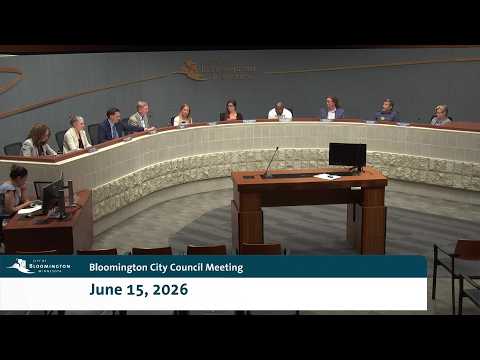
Bloomington’s City Council on June 15 moved to reclassify two long‑operating remote airport parking facilities in the South Loop and to allow permanent airport‑parking rights subject to performance standards and development milestones.
Staff presentations (Mike Centenario and others) described a multi‑year path that replaces temporary interim uses with permanent entitlements in the CX‑2 zoning district. For each site — Park and Fly (American Boulevard East) and Park and Go (International Drive) — staff recommended reguiding to high‑intensity mixed use, rezoning from HXR PD to CX‑2 PD, and adopting conditional‑use permits that permit continued surface parking only if the property reserves a 2.75‑acre development pad and meets landscaping and floor‑area expectations.
Developers said permanent entitlements are necessary to secure financing and attract investment. "Banks really don't like temporary rights," one applicant said, noting permanent approval improves competitiveness for large redevelopment. City attorney and staff described performance standards and a 10‑year compliance window for establishing a permanent development pad.
Council member Kamal Nelson argued the actions would effectively lock in more than nine acres of surface parking in the South Loop and said that outcome clashes with the district plan’s redevelopment goals. "Do you really want to approve surface parking? Nine acres of surface parking in the South Loop — that is what this decision does," Nelson said. Several council members acknowledged the tension but said the rezoning and CUP approach aims to balance current business realities with incentives for future development.
The council initially tabled a proposed tax‑related condition (a request to direct the assessor or attach a tax rule to the CUP) to allow staff and the city attorney to research legal options; the tabling motion passed 4–3. After a reconsideration later in the meeting the council approved the conditional‑use permits (each final CUP approval carried 6–1, with Council member Nelson opposed), and directed staff to return with any additional materials on conditions.
What this means: The rezoning and CUPs give the property owners defined, long‑term rights to operate remote airport parking while imposing performance standards intended to incentivize redevelopment. Opponents warned it may preserve large areas of surface parking; proponents said entitlements are necessary to unlock private investment and future redevelopment.
Next steps: Staff will monitor compliance with landscaping and the 2.75‑acre development pad requirement, and the council will revisit any proposed tax or assessment conditions at the June 29 meeting if legal research and assessor input supports further action.