Get Full Government Meeting Transcripts, Videos, & Alerts Forever!
Get email alerts on the Recycling Epr topic
No spam. Unsubscribe anytime.
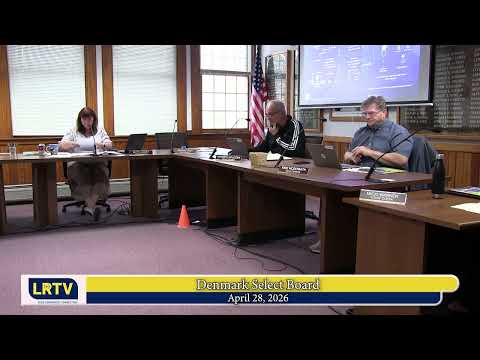
EcoMaine briefs Denmark on new recycling markets, facility upgrade and state EPR rollout
Summary
EcoMaine presented operations, commodity markets and an upcoming single-sort facility expansion and urged Denmark to track 2026 recycling expenses under Maine’s Extended Producer Responsibility (EPR) program so the town can seek reimbursements when the stewardship organization is appointed.
Eric Street, director of recycling at EcoMaine, told the Denmark Select Board on April 28 that EcoMaine manages a recycling sorting facility, a waste‑to‑energy plant and a landfill that together handle material from roughly 70 communities and about one‑third of Maine’s waste stream. He gave a market update — cardboard is recovering to about $80/ton, mixed paper remains weak (about $50/ton), metals are relatively stable, and plastics markets (including PET) remain volatile — and said those dynamics are driving changes in processing costs and contract pricing.
Street described a planned new single‑sort recycling facility adjacent to the waste‑to‑energy plant in Portland. The facility will increase sorting capacity from about 15 to 25 tons an hour, add optical sorters (increasing from one to about a dozen), and rely more on automated separation technologies. EcoMaine expects commissioning near the end of the year and invited Denmark officials to tour the site once it opens.
The largest portion of Street’s presentation covered Maine’s Extended Producer Responsibility law (EPR), passed in 2021 and now entering an implementation phase. Towns that track eligible recycling expenses during calendar year 2026 will be positioned to report tonnage and costs to the stewardship organization when it is selected; reimbursements to municipalities are expected to follow after reporting. Street said the DEP would not run the program long‑term and that a stewardship organization (SO) procurement remained pending, which delays actual payments to communities.
Board members asked how EPR reporting will work for single‑sort communities that send all recycling to EcoMaine; Street said the SO will be responsible for cost characterization and that EcoMaine can provide tonnage and tip‑fee data. He emphasized that not all recycling tonnage will count as “packaging” under the SO’s rules and that the SO will use characterization studies and median cost‑per‑ton analyses to set reimbursements for grouped community types.
Street also reviewed contract options: short (3‑year), medium (5‑year) and long (up to 30‑year) terms, and an ownership model for communities that buy into EcoMaine’s capital/asset base. He gave sample pricing ranges discussed with owner and contract communities (owner community tipping fees lower than contract rates) and said EcoMaine has moved some owner rates upward this year in part to reflect market pressure and potential EPR reimbursements. Street cautioned that EPR’s ultimate fiscal impact remains uncertain until the SO establishes the median cost methodology.
Why it matters: rising processing costs and evolving state policy could change Denmark’s long‑term waste/recycling costs. Street urged Denmark to keep accurate tonnage and cost records for 2026, and to consider timing and term length for any contract renewal so the town can weigh near‑term price stability against potential long‑term savings from ownership.
What’s next: EcoMaine offered to run Denmark’s tonnage and cost numbers to show comparative scenarios (contract vs. buy‑in) and to supply a packet of materials on EPR implementation and the proposed new facility. The Select Board asked staff to review contract materials and consider them at a future meeting.