Get Full Government Meeting Transcripts, Videos, & Alerts Forever!
Get email alerts on the Permit Enforcement topic
No spam. Unsubscribe anytime.
Denmark committee narrows CEO authority on permit suspensions, clarifies revocation and enforcement path
Summary
The Denmark ordinance-review committee rewrote permit-suspension and revocation language to separate the two actions, require written notice of suspension with corrective steps and timelines, allow the CEO limited discretion to permit corrective work, and refer unresolved revocations to the select board for enforcement remedies.
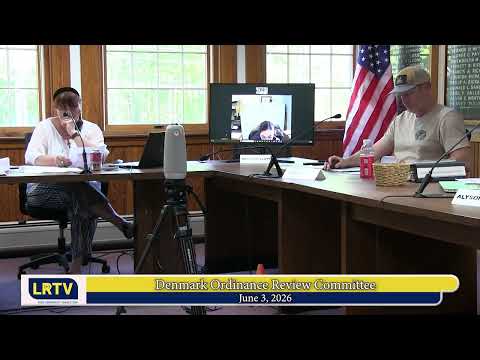
Meredith, a member of the ordinance-review committee, outlined a rewritten enforcement sequence that separates permit suspension from revocation and clarifies the CEO's responsibilities. She said the draft now makes explicit that "the CEO may suspend an issued permit when one or more of the following conditions are found," and that suspension will generally halt all authorized work except for corrective measures the CEO identifies.
The revision requires the Code Enforcement Officer (CEO) to provide written notice to the permit holder identifying the basis for suspension, the corrective measures needed and a reasonable deadline for compliance. Meredith told the committee the notice should also explain that "failure to complete the corrective measures by that deadline may result in revocation and additional actions." The draft gives the CEO discretion to authorize limited additional work when necessary to protect public health, safety or welfare.
Under the proposed revocation language, Meredith said, revocation becomes effective upon written notice to the permit holder and voids the permit; any continued work after revocation would constitute a separate violation and expose the property owner to daily civil penalties and other remedies. The draft also moves municipal-lien language earlier in the chapter so it is clearly tied to enforcement outcomes and restates that each day of continued violation is a separate enforcement event, mirroring the statute's phrasing.
Committee members debated whether the town should be authorized to step in and remediate violations at the owner's expense. One member noted that "I don't think it's common," and the group generally advised against including a broad town-remediation power outside contexts established by state dangerous-building statutes.
The draft requires the CEO to refer unresolved revocations to the select board for potential escalation; Meredith said this referral permits the select board to pursue injunctive relief, penalties, attorney fees or other remedies as appropriate. Committee discussion emphasized documenting the basis for escalated remedies and considering factors such as risk to public health or whether violations were willful when the select board determines enforcement strategy.
The committee did not adopt a new town-authorized remediation power and leaned toward retaining CEO-led day-to-day enforcement with select-board escalation for legal remedies. The committee will revisit related wording in future drafts and expects to present near-final text to the select board in a July workshop.
The meeting concluded with the committee confirming next steps for consolidating these enforcement provisions across the draft ordinance.