Get Full Government Meeting Transcripts, Videos, & Alerts Forever!
Get email alerts on the School Planning topic
No spam. Unsubscribe anytime.
Warren Township board backs intermediate school model as recommended path to address uneven elementary enrollment
Summary
After a year‑long advisory process, the board’s ad hoc planning for growth committee recommended an intermediate model (three K–3 schools plus one 4–5 intermediate) to better use existing classrooms and protect specialized programs; the board will review detailed implementation plans during a decision‑readiness period this summer and vote in September.
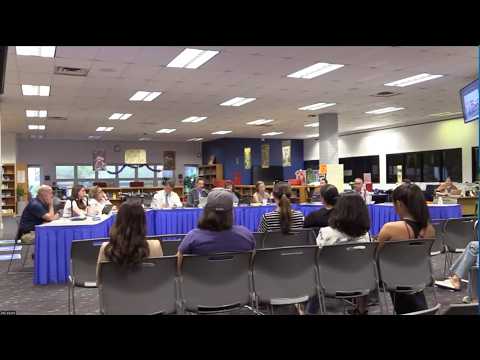
The Warren Township Board of Education heard a detailed final report from its year‑long Planning for Growth working group and ad hoc committee and was told the recommended path forward is an intermediate school model that groups grades 4 and 5 together while operating three K–3 neighborhood elementary schools.
The recommendation, presented by Superintendent Dr. Mingle and Planning Chair Miss Keller, follows 13 working‑group meetings, more than 500 volunteer hours, and review of 31 potential solutions ranging from scheduling and temporary space to new construction. ‘‘The board ad hoc planning for growth committee determined that the intermediate school model should move forward as a recommended model for board of education consideration,’’ Dr. Mingle said, framing the proposal as the option that balances space, program integrity and implementation complexity.
Why it matters: district enrollment has rebounded from a low of 1,537 in 2020–21 to about 1,726 today, and demographic modelling used by the district projects nearly 2,000 students by 2031 under known housing approvals; a stress‑test scenario could push enrollment toward 2,200. Dr. Mingle said growth is uneven across attendance zones and that continuing to optimize the current four K–5 model would require frequent reassignments, program relocations and repurposing of support spaces—moves that disproportionately affect specialized programs such as preschool and autism services.
What the intermediate model would do: under the recommendation, Warren schools would operate three lower elementary schools (K–3), one intermediate school for grades 4–5, and the existing Warren Middle School for grades 6–8. The district projects the model will allow more efficient use of existing classrooms and preserve class‑size maximums currently in policy (20 in kindergarten, 22 in grades 1–3, 24 in higher grades). Administrators proposed a decision‑readiness period through September, with public checkpoints (July 20 and August 31), additional analysis on preschool placement and staffing, and a target timeline for implementation in 2027–28 contingent on board action.
Public reaction: dozens of parents and community members spoke during two public comment periods. Parents repeatedly raised concerns about splitting siblings across different schools, increased daily logistics for working families, and potential social‑emotional impacts for young children who would transition between buildings. ‘‘My concern as a parent is that you’re breaking up my family,’’ said Nicole Garcia, a Warren pediatrician, reflecting a common theme among speakers. Others, including Deputy Mayor Vanessa Kan and multiple working‑group members, urged the community to trust the deliberative, data‑driven process and participate in forthcoming engagement opportunities.
Next steps and outstanding questions: Dr. Mingle emphasized that the recommendation does not finalize implementation details. Key decisions that remain include which building will house the intermediate grades, how preschool will be located and staffed, transportation route impacts, room‑by‑room program placement, and communications and transition supports for students and families. The board expects to review additional analysis this summer and will consider a formal vote at its September meeting.
The board did not vote on the structural recommendation tonight; administration and the ad hoc committee will pursue the decision‑readiness work over the summer and publish FAQs and additional materials for public review.