Get Full Government Meeting Transcripts, Videos, & Alerts Forever!
Get email alerts on the Ai Data Centers topic
No spam. Unsubscribe anytime.
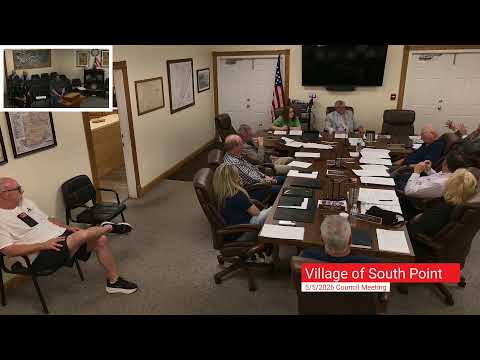
South Point council adopts six-month moratorium on AI data centers after resident concerns
Summary
The South Point Village Council on May 5 adopted Resolution 2604, imposing a six-month moratorium on AI data centers (4–2 vote) after residents and several council members raised health, environmental and definition concerns; the resolution includes emergency language making it effective immediately.
The South Point Village Council adopted Resolution 2604 on May 5, imposing a six-month moratorium on AI data centers after an often heated debate about potential health and environmental impacts and the lack of a clear legal definition.
The moratorium passed on a 4–2 roll call vote after the council amended the draft to shorten the temporary ban from 12 months to six. Mrs. Chapman moved to amend the resolution and later moved to adopt it; Mrs. Daniel seconded both motions. Roll call on adoption recorded: Mrs. Daniel yes, Mrs. Chapman yes, Mr. Payne no, Mr. Austin no, Mr. McCoy yes, Mr. Classing yes.
Why it mattered: supporters of the moratorium said residents deserve more study and public input before the village allows data centers that some members and commenters characterized as risky. "I was until I talked to the residents of the village and the village probably about 85% of them do not want this," said Maria, who reported canvassing neighbors. Those opposed argued the draft was overly broad and could block small, non-hyperscale facilities that might generate revenue and local jobs.
Council members also flagged a drafting problem: the resolution did not define what an "AI data center" would include. Multiple speakers noted that without a clear definition the moratorium could be interpreted to cover ordinary business servers or even small on-site systems. "If a building has more than two computers in it, it's a data center," one council member warned while arguing the language could unintentionally capture many everyday operations.
Supporters pointed to environmental and health worries raised by some materials presented at the meeting, including concerns about wastewater disposal and electromagnetic fields; a written submission circulated at the meeting cited national commentary and urged additional study. Opponents said the village should investigate potential revenue opportunities and technical mitigation before pursuing a permanent ban.
Procedural and timing details: council members discussed whether emergency language should be used. The resolution contains emergency provisions that, as discussed at the meeting, would cause the moratorium to take effect immediately upon adoption. The council also agreed the moratorium could be rescinded or revised if follow-up study showed it was unnecessary or if projects could be demonstrated to be safe and compliant.
What happens next: the council adopted the six-month moratorium and directed staff and council members to gather further information. The resolution is effective immediately per its emergency language; council members said they expect to revisit the matter if new information becomes available.