Get Full Government Meeting Transcripts, Videos, & Alerts Forever!
Get email alerts on the Land Acquisition Nordic topic
No spam. Unsubscribe anytime.
Large turnout at Presque Isle hearing over proposed Nordic Heritage Center purchase; council tables decision and moves to executive session
Summary
Dozens of residents urged both preserving and rejecting the Nordic Heritage Center acquisition during a Sept. 25 public hearing. Speakers debated trails, liability, costs and potential private funding; after extended comment the council voted to table the purchase discussion indefinitely and entered executive session to negotiate real estate terms.
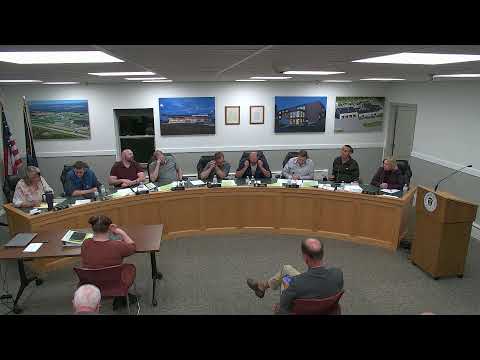
Presque Isle residents filled the chamber Sept. 25 for a public hearing on whether the city should pursue buying the Nordic Heritage Center and its roughly 750 acres after the city manager submitted a letter of interest to pause a private sale.
Supporters and opponents made competing appeals at the podium. Proponents described the Nordic trails as a community asset and economic attractor: “If we don't press pause and secure it, we could lose it,” said an unnamed supporter who urged conservation of the trails and noted grant and private funding opportunities. Multiple residents recounted using the trails for decades and warned that a private buyer could lock the land away from public use.
Other speakers pressed the council for rigorous numbers and cautioned taxpayers. Darren Hunter relayed concerns from a former Nordic president about infrastructure and safety: the on-site well needs testing, the lodging lacks sprinkler systems, and lead contamination tied to a former gun range would require costly remediation. Several speakers said insurance, septic and building-code issues would substantially raise the city’s costs if it were to own the property.
Business- and taxpayer-minded residents urged caution. Mike Tibido cited his personal tax increase and recommended a municipal revaluation and clearer cost projections before approving the purchase. Multiple commenters said a detailed cost-benefit and operating plan — showing private matches or grants in writing — should precede a city commitment.
Proponents countered that conservation grants and extended easements could reimburse a substantial share of acquisition costs if the city conserved acreage; one proponent said conserving land could return "half the appraised value" in grant reimbursement. Several advocates argued a lean, trail-focused operating model would cost far less than historically reported Nordic budgets.
Procedural choices dominated council debate after the public comment period. Councilors debated options including placing a referendum on a future ballot (staff said it could not be prepared in time for the November election and estimated an off-cycle vote might cost $3,000–$5,000) and tabling the matter for a week to gather private funding commitments. One motion to table the discussion until Oct. 1 failed on a 3–4 voice count. Later the council passed a motion to table the purchase indefinitely and then voted to enter executive session under 1 M.R.S.A. §405(6)(C) to discuss real estate negotiations.
City Manager Sonia Iser said the letter of interest had been intended as a pause to allow community discussion and to let local partners and funders step forward. She told the council she had received multiple offers of help and that whether the council ultimately votes to pursue purchase or not, the work continues: “If it is a no vote, then we bring those people together and we figure out how to get to yes,” she said.
What the council did not decide Monday was a purchase price, formal purchase-and-sale terms, or a financing plan. The property owner asked for an offer in the form of a purchase-and-sale agreement; councilors discussed inspection periods and draft terms but said that written guarantees from private partners would be necessary to change several members’ positions.
The public hearing and council debate highlighted two clear divides: whether the city’s short-term tax burden is an acceptable cost to secure a large outdoor recreation asset, and whether private partners and grant programs can reliably defray acquisition and operating costs. After tabling the issue indefinitely and moving into executive session, the council signaled that further deliberation and negotiation will continue out of the public meeting.
The council also asked staff for a conservation-overlay map, more detail on grant mechanics (including whether extending conservation beyond current restrictions would be required for grant money), and any written commitments from private funders or nonprofits before returning to public consideration.