Get Full Government Meeting Transcripts, Videos, & Alerts Forever!
Get email alerts on the Municipal Budgeting topic
No spam. Unsubscribe anytime.
Presque Isle council hears maintenance-of-effort 2026 budget amid revenue pressures
Summary
City Manager Sonia Iser presented a maintenance-of-effort FY2026 budget that holds core services steady while delaying capital buys; she warned of a 16.26% drop in state revenue sharing and rising utility and labor costs as council and staff prepare further workshops before final adoption by Dec. 31.
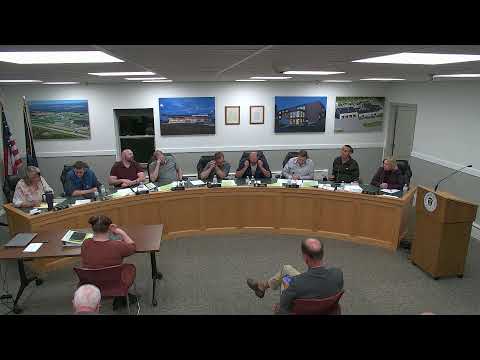
Presque Isle City Manager Sonia Iser presented the city’s proposed fiscal year 2026 budget at a Sept. 25 budget workshop, describing it as a “maintenance-of-effort” plan that preserves core services and positions while postponing major new initiatives.
Iser told the council and residents the draft budget balances community priorities with available resources and emphasizes fiscal responsibility amid inflation. “This budget commits to fiscal responsibility in the current inflationary environment,” she said, listing workforce retention, equity-minded service delivery, and long-term sustainability among the guiding principles.
The presentation highlighted several revenue and cost pressures shaping the draft. Iser said state revenue sharing is down roughly 16.26 percent compared with last year, an amount she characterized as on the order of the mid-six-hundreds of thousands of dollars; she also cited negotiated union cost-of-living increases (about 4 percent), rising fleet leasing costs and utility increases of roughly 6.36 percent. Those factors, she said, contributed to a conservative set of assumptions and several deferred capital purchases.
The draft projects municipal expenditures of about $20.35 million for 2026 and shows a modest projected revenue increase of roughly $171,000, driven largely by EMS service revenue. To preserve fiscal flexibility, the proposal holds many operating line items flat, delays an excavator purchase and some paving projects, and recommends a surplus supplement of $750,000 (up from $600,000 last year).
Iser described ongoing work to recover unpaid service fees and recent grant successes; she said the grant writer and fire chief secured an additional $137,784 in recent weeks and that year-to-date recoveries of unpaid taxes totaled about $80,000.
She also spelled out areas needing more forecasting: property tax-acquired parcels, environmental remediation and public-health cleanup costs (including campsites and blighted properties), and housing investments such as site development and developer incentives.
The manager said the process will continue with data collection, council workshops, and an auditor briefing planned for Nov. 12; the charter requires the council to adopt a final budget by Dec. 31, 2025, with implementation on Jan. 1, 2026.
Council members and the public used the workshop to raise priorities: improving neighborhood infrastructure and road repairs, strengthening communication and transparency, and seeking outside grants to reduce the local tax burden. Iser and the council said they would continue to refine assumptions and return with more detail on revenues, insurance projections and health-care costs in the coming weeks.
The council did not take a budget vote at the meeting; Iser described the presentation as the first public hearing and an early step in a multi-month process.
The council will hold additional hearings and workshops before a final vote is required by the end of the year.