Get Full Government Meeting Transcripts, Videos, & Alerts Forever!
Get email alerts on the Transgender Policy topic
No spam. Unsubscribe anytime.
Winthrop School Board weighs transgender/gender‑expansive student policy amid legal and safety concerns
Summary
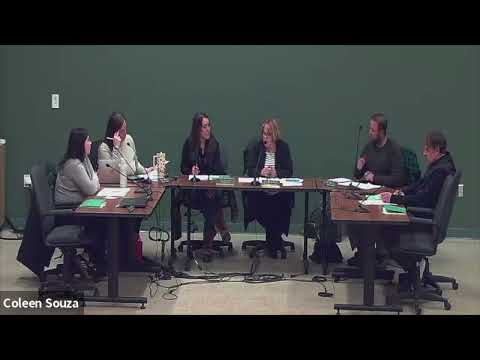
At its Feb. 25 meeting, the Winthrop School Board debated whether to keep its existing JB/JBR policy, adopt a newer ACAA model policy, or take other steps; staff described current local accommodations and principals said they have not seen significant problems, while board members raised concerns about girls’ privacy, sports fairness and legal exposure.
The Winthrop School Board spent a large portion of its Feb. 25 meeting debating how the district should handle policy language for transgender and gender‑expansive students, with members weighing student privacy and sports fairness against legal risk and state law.
Board members discussed three principal options: retain the district’s existing policy (JB and its regulation JBR), adopt a model policy called ACAA that explicitly references gender‑expansive students and uses more discretionary language, or remove or replace JB/JBR with different local language. Superintendent Dr. Foley told the board the current JB policy aligns with Maine law, while the ACAA model would allow more flexible accommodations, for example using “may” instead of “shall” in places and explicitly permitting students to use the restroom aligned with their gender identity without requiring a single‑user restroom.
Board members expressed a range of concerns. Several said they were focused on protecting girls’ privacy and preserving fairness in girls’ sports, and asked how small numbers of transgender students would affect competitions and locker‑room comfort. Other members urged caution about excluding or further marginalizing a population they described as vulnerable; one board member said the Maine Integrated Youth Health Survey indicates transgender students are a small share of the student body but a high‑risk population deserving protections. Multiple members asked for additional data and policy language samples before making changes.
School leaders described how the district currently handles accommodations. At the high school, the principal said three transgender students had been accommodated over the past seven years and that students were allowed to use restrooms and locker‑room options that match the gender they present most of the time; the high school also offers single‑stall restrooms and the nurse’s bathroom for privacy. The middle school principal said one student in the last three years used the nurse’s restroom and that parents were supportive of individualized accommodations. Both principals said they had not experienced major incidents tied to those arrangements.
Legal and financial considerations were central to the discussion. Dr. Foley summarized the litigation landscape: several districts are the subject of complaints before the Maine Human Rights Commission, and the district’s insurance carrier has a collective cap of $250,000 for defense costs across involved districts; if that cap is exhausted, local districts would be responsible for remaining legal expenses. Board members were split on whether adopting more restrictive local language could trigger litigation or whether changing policy would put the district at risk under state human‑rights law.
The board asked the policy committee to compile sample policy language used elsewhere, including examples of districts that have moved provisions into other sections of their policy code and examples that preserve the original intent of separating sex‑designated athletics. Members requested comparative data about how other districts designate sports (male/female/co‑ed), and asked staff to circulate Maine Integrated Youth Health Survey findings and related research before the next meeting.
The board took no immediate policy vote; members directed staff and the policy committee to return with model language and comparative policies to inform a future decision.
"We have a duty to protect all students," a member said during debate, while another asked the committee to gather the policies of districts that have taken different approaches so the board could compare language and consequences.
The discussion concluded with a request for more information and a timeline to review sample policies ahead of a follow‑up meeting.