Get Full Government Meeting Transcripts, Videos, & Alerts Forever!
Get email alerts on the School Budget Class Size topic
No spam. Unsubscribe anytime.
Winthrop parents and substitutes urge board to reverse staffing cuts as enrollment jumps
Summary
Parents and substitute teachers pressed the Winthrop School Board to restore teaching positions after the district reported a roughly 14% enrollment increase at the grade school; administrators presented FY27 budget requests that include multilingual and special‑education staffing, technology upgrades, and capital projects.
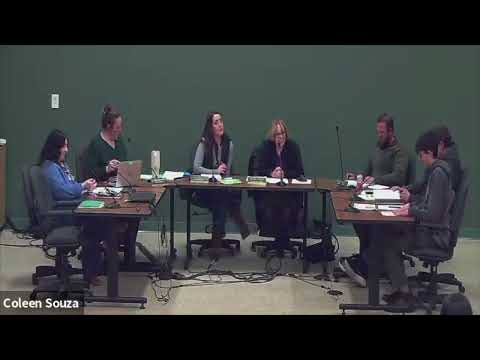
Several parents and substitute teachers told the Winthrop School Board on March 3 that rising enrollment and larger class sizes are straining teachers and students and urged the district to restore teaching positions in the FY27 budget.
"That is an increase of more than 50 students from last year, 14%," said Amelia Arnold, a parent with a first- and fourth-grader, describing grade-school counts that rose from about 371 last year to over 420 this year and projected to be 423 next year. Arnold said some classrooms have ranged from 21 to 23 students and warned reductions to staffing — including a proposed cut of the full-time "peak" enrichment position to half time — would harm supports for struggling and high-achieving students alike.
Substitute teacher Trisha Hitz Lefountain, who said she has been subbing in Winthrop K–12 for about five years, told the board she could "see the fatigue on some of the staff" in the lower grades and urged the district to "listen to the teachers and the parents when they say that the large classrooms are not beneficial."
District leaders presented the FY27 budget proposals after public comment. Dr. Foley, the superintendent, said the current administrative request represents approximately a 5.4% spending increase driven largely by staff changes and benefit elections. He gave board members an order‑of‑magnitude figure: "1% is about $140,000 and a new teacher is $90,000." Board members asked administrators to return with specific cost estimates for adding a teacher at the grade school.
High‑school Principal Dufour described instructional supply needs tied to new electives and replenishing science lab materials depleted during last year’s budget freeze. He also proposed a 0.5 FTE multilingual (ELL) teacher to be shared across buildings to support potentially three to five ELL students at the high school and others districtwide.
Middle‑school Principal Lori Snell outlined increases for contracted interpreter services, science lab table replacements (about $10,000 per classroom) and a plan to reallocate an existing edtech position to provide a half‑time math interventionist. At the grade school, the principal said library circulation topped 9,000 items in 2025 and singled out translation and interpretation needs as the multilingual student population grows.
Megan White, director of teaching and learning, described technology and curriculum budget items that include replacing a largely nonfunctional grade‑school camera system (requesting about $50,000), planning for end‑of‑service server replacement in 2027 (estimates ranging from roughly $120,000 to more than $250,000), and continuing multi‑year curriculum reviews and subscriptions.
The board highlighted the urgency of the class‑size question. Board member Tim asked administrators to provide a costed scenario for hiring an additional teacher at the grade school and to present the figure at the next budget discussion. "If we could hire two teachers, do we put it in third grade, fourth grade, or fifth grade?" he asked, urging the administration to prioritize where intervention could be most effective.
Dr. Foley also flagged special‑education budget drivers: the district currently has about 105 students on individualized education programs and anticipates that number could increase to around 110, and tuition and out‑of‑district placement costs have risen.
The board did not approve the budget at the meeting; members directed staff to return with requested cost estimates and additional materials comparing per‑pupil spending with neighboring communities.
The meeting concluded with votes on several policy committee recommendations and an itemsetting process to bring a Title IX–related policy package to the policy committee for review (see separate story).
The board’s next scheduled meetings were identified as April 1 and April 15; board members requested options and budget adjustments to be presented at the next budget debate.