Get Full Government Meeting Transcripts, Videos, & Alerts Forever!
Get email alerts on the Land Use Data Centers topic
No spam. Unsubscribe anytime.
Hundreds of public comments press Spokane council for data‑center moratorium as council debates timing
Summary
During open forum, roughly 40 speakers urged the Spokane City Council to enact a moratorium or ban on proposed data centers, citing threats to the Spokane River, the regional aquifer, energy costs and environmental justice; council members debated whether to reconsider adding an amendment to the agenda tonight and several urged more time for legal review.
A large crowd of residents and organizers used the council’s open‑forum to press elected officials to adopt a moratorium or ban on data centers in Spokane, arguing such facilities pose risks to water supplies, energy costs and neighborhood health.
Ahead of public comment, councilmembers debated a procedural motion to reconsider adding a data‑center ordinance and an amendment that had circulated earlier in the afternoon. Councilmember Tell Us (as recorded) explained the amendment circulating would allow a data center if it were less than a specified share of a facility’s square footage; other councilmembers and legal counsel warned the language might be ambiguous and urged more time for public review and legal clarification.
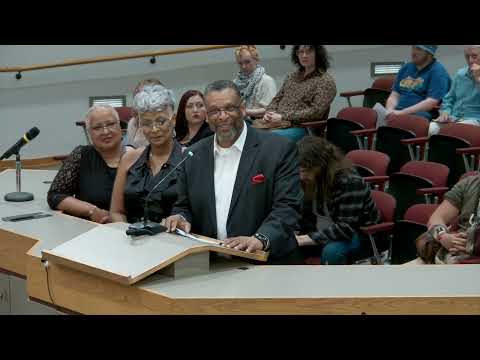
When the public‑comment period opened, roughly 40 speakers used their two minutes to press for action. Breean McGee, who spoke online, told the council, “We need this to be figured out. We need this to be figured out within a week. We cannot wait any longer.” Other speakers, representing neighborhood groups, the Sierra Club, Veterans for Peace and local organizers, raised related concerns:
- Multiple speakers cited water consumption and aquifer risk. One organizer told the council that an average data center may use "around 1 million to 5 million gallons of water" for cooling (comment attributed to a participant who said there are studies from Texas, Georgia and Virginia reporting large water and bill impacts). Another said the Spokane River ran low last year and the regional aquifer is a sole source of drinking water for hundreds of thousands.
- Several neighbors described noise, constant lighting and possible property impacts near industrial‑scale facilities. Speakers also warned of rising utility bills, argued the facilities bring few long‑term jobs compared with their infrastructure demands, and asked the council to coordinate moratorium efforts with the county and nearby cities.
- Equity and stewardship arguments were frequent. Speakers tied the issue to the land acknowledgment read at the meeting’s start, saying the city should not simultaneously honor Indigenous stewardship and permit large water‑and‑power‑intensive facilities that could harm those communities.
On the council floor, members expressed divergent procedural views. Some said they supported a moratorium in principle but wanted stronger, clearer legal language and time for coordinated regional action. One councilmember asked legal staff questions about the definition of "primarily a data center" and whether the city’s levers were sufficient to stop construction; another councilmember said a week’s delay would allow clearer drafting and public engagement.
No final ordinance vote on a moratorium occurred at the meeting. Councilmembers indicated they would continue to refine language, seek legal analysis and consider coordinating with the county and other jurisdictions before taking a final vote.
The meeting record shows strong public opposition to data centers and clear council concern about drafting enforceable, unambiguous language; the debate is expected to continue at future meetings.