Get Full Government Meeting Transcripts, Videos, & Alerts Forever!
Get email alerts on the Selection Process topic
No spam. Unsubscribe anytime.
Charlotte council adopts ballot nomination method and sets interview step for mayoral appointment
Summary
After hours of procedural debate June 15, Charlotte City Council approved a nomination-and-ballot approach for choosing an interim mayor, allowing up to three nominations per councilmember and advancing top finalists to interviews. The council also debated recusal rules and scheduling for follow-up steps.
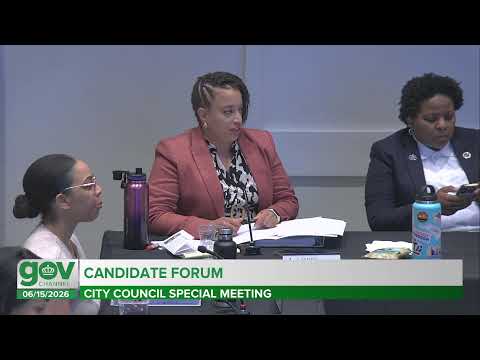
Charlotte — On June 15 the Charlotte City Council moved to formalize how it will select an interim mayor, adopting a nomination-and-ballot method and agreeing to an additional interview step for finalists after a public candidate forum.
Councilmember Lorna Mayfield, who introduced the motion, said the extra step would let council “work with staff based on the survey results and then ask questions to those candidates” instead of deciding the appointment solely from two-minute forum statements. Mayfield’s motion was seconded and amended during debate to permit up to three nominations from each councilmember; the amended motion carried. The clerk will create a ballot of eligible applicants for councilmembers to return on the schedule the body adopted.
City Attorney guidance shaped the discussion. In a presentation the attorney explained the legal options available to council: either the motion method (one motion on the floor at a time) or the historical nomination-and-ballot method. The attorney said the appointment requires majority support and explained the recommended advancement thresholds: "The appointment would require six votes; the recommendation... is that a candidate must have at least three votes to move forward," the City Attorney said during the presentation.
Councilmembers sparred over details: whether candidates who did not attend the forum should be eliminated automatically, how many nominations each councilmember should be allowed to submit, and the timeline for interviews and notices. After extended debate the council agreed to permit up to three nominations per councilmember and to advance the top finalists (the council discussed top‑five as an initial target) to a scheduled interview session. The clerk and staff were tasked with preparing ballots and public notices consistent with the statutory notice period discussed in the meeting.
Members also raised—but did not resolve—an ethics question about whether a sitting councilmember who is a candidate should be excused from participating in later rounds. The City Attorney advised there is a legal difference between a statutory conflict (which would require recusal) and a voluntary request to be excused because of appearances; in the latter case the council could vote to excuse a member if that member requests it. "It is up to you to ask to be excused," the City Attorney said, noting past precedent in which a sitting councilmember who was appointed to fill a vacancy participated in votes.
Council voted to proceed with the public forum to hear candidates’ two‑minute statements and to return to the selection mechanics at the agreed next steps. Staff will circulate the ballot of eligible applicants and notify candidates selected for interviews per the timeline the council adopted during the meeting.
What’s next: Council will submit nominations on the distributed ballot and the clerk will tally results; the top finalists will be called back for interviews in a public meeting scheduled as part of the follow-up process. The council’s actions set the procedural framework but leave several detailed rules — including whether the mayor pro tem will participate in later rounds if he is a finalist — to be clarified as the process proceeds.