Get Full Government Meeting Transcripts, Videos, & Alerts Forever!
Get email alerts on the Jail Infrastructure topic
No spam. Unsubscribe anytime.
Titus County sheriff warns of failing jail systems, seeks tens of thousands for repairs and upgrades
Summary
At a June 11 Titus County budget workshop, the sheriff told commissioners rising inmate counts and failing jail systems are driving up expenses and asked the court to fund urgent repairs — including $75,000 for tankless water heaters and a $287,000–$299,000 replacement for the jail control panel.
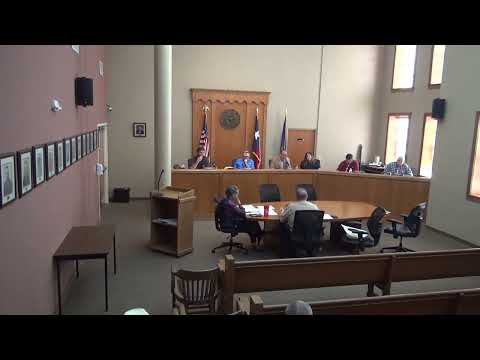
At a June 11 workshop of the Titus County Commissioners Court, the county sheriff laid out a series of budget requests and urgent repairs for the county jail, saying rising inmate populations and obsolete equipment are straining operations and risking noncompliance with the state jail commission.
The sheriff told the court the jail has averaged about 160 to 180 inmates this year, up from 120–140 in prior years, and that the Texas Department of Corrections is extending county holds for some TDC-bound inmates—sometimes up to the 45-day limit—while the state’s prisons manage capacity. "If I could get rid of those 45 inmates in the jail, my food cost, everything else would go down tremendously," the sheriff said, describing how the higher population and longer holds are increasing the food budget and bed-space pressure.
Why it matters: the sheriff reported three critical facility failures that the jail commission requires be functional—water-heating boilers, a commercial air-conditioning unit and the central control panel that runs the jail’s cameras, doors and intercoms. He provided vendor estimates to the court: roughly $75,000 to replace aging boiler systems with a tankless water-heating solution; about $41,000 to replace a large rooftop AC unit (or $28,000 to repair it); and bids in the $287,000–$299,000 range to replace the jail’s control-panel/intercom/camera system.
The sheriff framed the repairs as mandatory. "That's one of the three things that I've got to have back there," he said of the water-heater replacement, and he told commissioners the full control-panel replacement would be phased to avoid shutting the jail down. Vendors estimated about one week to deliver the AC unit and roughly 30 days to install and phase in a new control system.
Other budget requests and drivers: the sheriff asked the court to smooth multi-year step raises into annual increments (by combining two line items) without increasing total pay costs so employees receive a small raise each year rather than a larger bump every few years. He also requested increases for fleet fuel and maintenance, ammunition ($5,000), electronic-camera maintenance (from about $5,800 to $6,500), and expanded cell-phone coverage and training funds to meet new state requirements. On training, he cited House Bill 33 as adding roughly 16 hours of mandated school-shooting response training per officer and said travel to centralized training sites will increase costs.
On technology and equipment the sheriff said licensing and cloud storage for body and car cameras (WatchGuard) have produced a substantial new recurring cost; the department’s older drone is obsolete and he requested about $10,000 as a fallback if competitive grants do not come through.
Court response and next steps: commissioners discussed funding options and procurement timing. Court members agreed the water-heater and AC repairs could proceed from funds currently available in general or building-maintenance lines and instructed the sheriff to pursue vendor timelines and necessary contingency budgeting. The larger control-panel replacement will be placed on a future agenda (June 22 was discussed) for formal consideration and potential vote.
What remains unresolved: the sheriff provided estimated replacement and repair costs but did not present a formal motion or a finalized funding source for the larger control-panel replacement during the workshop. Commissioners asked staff to prepare a contingency and to include the control-panel item for formal action at a future meeting.
The workshop closed without an immediate vote on those capital items; commissioners will review vendor timelines, fund availability and the formal agenda language before making final appropriations.