Get Full Government Meeting Transcripts, Videos, & Alerts Forever!
Get email alerts on the Rent Stabilization topic
No spam. Unsubscribe anytime.
Committee urges state action on rent stabilization after hours-long public comment
Summary
The Holyoke City Council’s Development & Government Relations Committee voted 3–1 to send a nonbinding resolution to the full council urging support for state rent-stabilization legislation and a related November 2026 ballot initiative, after hours of public testimony for and against the measures.
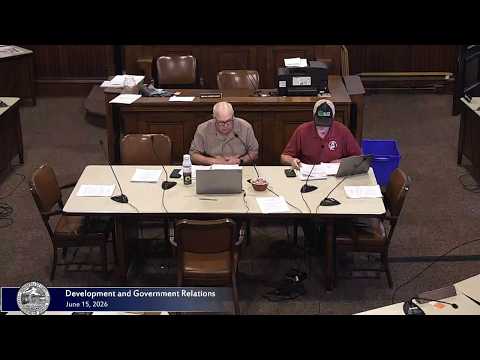
The Development & Government Relations Committee of the Holyoke City Council on June 15 passed a nonbinding resolution urging support for state rent-stabilization authority and an associated November 2026 initiative petition, sending a favorable report to the full council for final action.
The committee voted 3–1 after extended public comment and debate. Councillor Israel Rivera moved to pass the resolution; Councillor Mike Sullivan voted no, while Councillors Nicole Masonette, Israel Rivera and Chair Richard Purcell voted yes. The resolution asks the city clerk to transmit copies to the attorney general, Holyoke’s legislative delegation and the governor.
Supporters told the committee the resolution would give Holyoke a stronger voice in urging action on rising rents. “Rent stabilization fixes displacement by slowing it down and preventing families from being priced out faster than their incomes can keep up,” said Janette Rivera, organizer for Neighbor to Neighbor, who explained the bill would allow municipalities to design local rules and limit annual increases to a CPI-based cap. Rivera urged the council to press the legislature and noted organizers are collecting signatures for a November 2026 ballot question.
Opponents cautioned that the resolution, as written, endorses both a pending legislative bill and the ballot question, which they said differ in important ways. “This is not an ability for the city to make its own policies. It sets a cap,” said Connor Unit, chair of Housing for Massachusetts (a campaign opposed to the ballot question), who described the measures’ CPI-or-5% cap and warned they include limited mechanisms to recover renovation costs.
Other opponents said narrow exemptions for owner-occupied small landlords could push some owners to sell, concentrating ownership among larger landlords. A former legislative staffer said that could reduce small-scale landlords and potentially shrink the tax base unless the legislature pairs any limit with additional supply programs.
Several residents delivered personal testimony about housing instability. “Doing nothing is not a solution,” Janette Rivera said, urging the council to send the resolution as a civic signal to state policymakers. Supporters and opponents both asked the council to be precise because the ballot question and the bill differ on exemptions and on how new construction would be treated.
Committee members debated that procedural point on the record: some councillors and speakers said the resolution conflates the ballot initiative and the legislation; others emphasized the motion is nonbinding and intended to express Holyoke residents’ views. Chair Purcell and staff confirmed the committee’s favorable report will be transmitted and the full City Council will consider the matter at its next meeting.
What happens next: the committee’s report will be on the full Holyoke City Council agenda the following evening. Because the resolution is nonbinding, it would express the council’s support but not implement local policy; any local rent-stabilization implementation would require state enabling legislation and subsequent local ordinances.