Get Full Government Meeting Transcripts, Videos, & Alerts Forever!
Get email alerts on the Elections Vote Centers topic
No spam. Unsubscribe anytime.
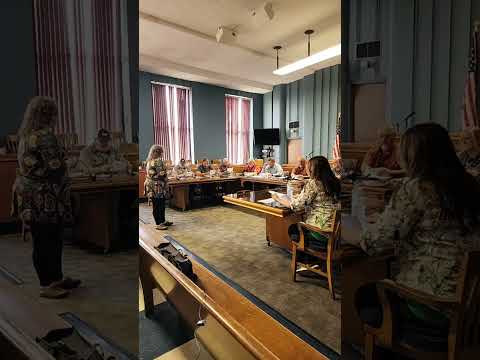
Secretary of State staff present vote‑center plan to Randolph County quorum court
Summary
State election staff outlined how vote centers would let registered voters cast ballots at any county vote center and described connectivity, accessibility and staffing tradeoffs; county officials raised questions about ADA access and local internet reliability.
Wesley Bowlin introduced two Arkansas Secretary of State staff to explain what "vote centers" would mean for Randolph County and to describe the county's readiness.
Aaron McNeal, a representative from the Secretary of State's office, explained vote centers allow any registered county voter to cast a ballot at any designated vote center instead of a single precinct location. "They're just a place where everyone can go vote," McNeal said, adding that the enabling statute dates to about 2015 and that most Arkansas counties (64 of 75) now use vote centers. He said the approach can reduce the number of polling sites and shift staffing needs while offering convenience to mobile voters.
Laura Walls, also with the Secretary of State's office, described operational requirements. She said connectivity is important to keep voter check‑in tablets synchronized so the statewide registration shows who has voted, but emphasized that voting devices used to mark and count ballots are not connected to the internet. Walls told the court the tablets that register a voter's participation are networked to the state computer to prevent duplicate voting, while ballot marking and tabulation devices remain offline.
Justices asked about accessibility and specific polling sites. Presenters acknowledged that some preferred local locations are not ADA compliant and described local efforts to find or modify sites to meet accessibility requirements, citing one Mineral Springs community center with good internet but no paved parking as an example. McNeal and Walls said locations with reliable internet reduce the need for rented mobile hotspots and lower operating costs.
The presenters said counties moving to vote centers typically staff fewer total polling sites but may need higher staff numbers at larger sites to handle volume. They described a continued need to recruit poll workers; the presenters noted that the county's poll worker pool has aged and participation has declined. They told the court the Secretary of State's office would work with local officials during any transition and answer follow‑up questions.
The presentation does not bind the court to a policy change; presenters asked for the court's awareness and cooperation if the county chooses to transition toward vote centers ahead of upcoming elections.