Get Full Government Meeting Transcripts, Videos, & Alerts Forever!
Get email alerts on the Budget topic
No spam. Unsubscribe anytime.
Altoona Area SD board approves 3% tax increase in 5–4 vote amid debate over uncertain state aid
Summary
After a lengthy debate over whether projected state funding would cover the gap, the Altoona Area School District board narrowly approved a 3% tax increase tied to the 2026–27 general fund budget, with the motion passing five to four; the board also approved homestead/farmstead and fund‑balance resolutions.
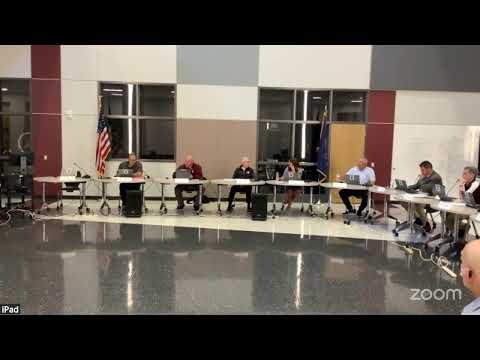
The Altoona Area School District Board of Directors voted 5–4 to adopt the 2026–27 general fund budget and a corresponding 3% tax increase, after members debated whether forthcoming state aid made a tax hike necessary.
Board members separated item 3A (the budget and tax resolution) for discussion before the roll call. One board member who reviewed Pennsylvania Department of Education figures said the district’s revenue projections looked substantially higher than the amounts the budget used, arguing the board might be “flying blind” and that, over several years, the district could receive “nine, almost $10 million more revenue projected than was originally budgeted for.” That member said the proposed 3% increase would raise roughly $600,000 and noted that publicly posted state figures showed an allocation for basic education that could offset an amount in the same range.
The district’s finance officer, Sue, replied that the figures cited reflected the governor’s budget proposal rather than enacted state funding. “The numbers that are out there are based on the governor’s budget proposal,” she said, and explained she had used a more conservative estimate for the Ready to Learn funding when preparing the district budget because the governor’s proposal had not yet been approved by the legislature.
Board discussion also noted long‑term capital needs: administration cited an estimated $100–$140 million for HVAC, plumbing and electrical upgrades that may be needed in the next five to ten years, and said recent facility projects have been financed in part with one‑time federal funding. Administrators emphasized they have sought to be fiscally prudent, using federal dollars for capital projects and maintaining reserves.
After debate, the board took a roll call on item 3A. The recorded vote was five in favor and four opposed; the motion passed. The board then approved the homestead and farmstead exclusion resolution and a resolution to commit unassigned fund balance in excess of 8% by unanimous voice vote.
The budget documents presented to the board included line items cited by administration: expenditures were read in the meeting as 135,163,115 (as stated in the record) with revenues and other sources noted in the presentation. Administration warned several revenue items, including Ready to Learn and other one‑time or proposed allocations, were provisional and contingent on state action.
What happens next: the budget and tax resolution as adopted will be reflected in district tax notices and fiscal planning for 2026–27. Board members said uncertainty about state funding will remain a key factor in next year’s projections and could shape decisions about future tax actions.
Discussion and Decisions
- Discussion: A board member urged caution, citing PDE figures and arguing the district might receive materially more state funding than budgeted. - Clarification: Finance officer Sue said the governor’s budget proposal differs from enacted allocations and that Ready to Learn funding is uncertain. - Decision: Motion to approve item 3A (2026–27 budget and 3% tax increase) passed 5–4 by roll call. Motions to approve the homestead/farmstead resolution and to commit unassigned fund balance in excess of 8% carried by unanimous voice vote.
Quotes
“we would be nearly it'd be like nine almost $10 million more revenue projected than was originally budgeted for,” a board member said after reviewing state data.
“The numbers that are out there are based on the governor’s budget proposal,” Sue said in response, noting the district had budgeted conservatively for the Ready to Learn line in the event the governor’s proposal was not enacted.
Votes at a glance
- Item 3A (Final general fund budget 2026–27 and annual tax resolution — 3% increase): Passed by roll call, 5 yes, 4 no. - Item 3B (Homestead and farmstead exclusion resolution): Approved (voice vote). - Item 3C (Resolution to commit unassigned fund balance in excess of 8%): Approved (voice vote).
Context
Board members framed the decision as a tradeoff between taxing now to meet service and facility needs and waiting for uncertain state revenues that may never materialize. Administration pointed to recent one‑time federal funds that enabled capital improvements and warned that some line items historically tied to executive‑branch proposals may not be guaranteed year to year.
The board also approved a slate of routine and contract items later in the agenda, including employee benefit contracts and several vendor agreements; a separate vote was held later to approve a rental agreement for Mansion Park used by Bishop Guilfoile Academy.