Get Full Government Meeting Transcripts, Videos, & Alerts Forever!
Get email alerts on the Municipal Budget topic
No spam. Unsubscribe anytime.
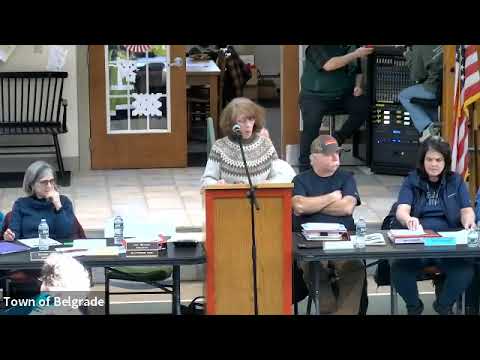
Belgrade approves budgets, revenue estimates and multiple appropriations at town meeting
Summary
Voters approved a series of revenue estimates and appropriations covering municipal operations, public safety, roads, facilities, and recreation; articles passed after standard debate and a few procedural amendments. The meeting also authorized select board authority to use undesignated funds if departmental budgets are rejected.
Belgrade’s town meeting approved a series of budget and revenue articles covering municipal administration, public safety, roads, facilities and recreation, along with related estimated revenues and appropriations.
Select board members and budget committee representatives presented each warrant article, explaining line items such as vehicle and boat excise taxes, municipal insurance and HRA administration, and special revenue estimates. The board said estimated excise revenues were conservative because much vehicle and boat excise revenue is seasonal. ‘‘We are being conservative,’’ the treasurer said when asked about lower proposed excise estimates.
Public safety and fire and rescue budgets drew discussion about capital reserves for vehicle replacement. Fire Chief Dan McKenzie told voters the department has been contributing annually to a capital reserve (roughly $786,000 reported on the floor) for future apparatus replacement; he warned of rising vehicle costs and parts shortages.
Other highlights: the meeting approved an article setting a 4% interest rate on overpayments of taxes (Article 5), the town adopted an ordinance change to allow the select board to review and update building permit fees, and the meeting authorized the select board to use undesignated (general) fund money to maintain operations at 2025 levels if departmental budgets are rejected (Article 21).
Voters approved most appropriations by voice or hand count; some contested items required recorded counts or amendments. The select board and budget committee had recommended approval on the majority of the articles presented.